The Difference Between Rising Stem and Non-Rising Stem Gate Valves
Apr 14, 2026
Rising stem and non-rising stem gate valves are two of the most commonly used types of gate valves in industrial applications. The core difference between the two lies in the movement of the valve stem, and this structural difference extends to aspects such as protection performance, installation requirements, maintenance difficulty, and suitable application scenarios. Here, we will break down these differences, from core features to practical applications, to help quickly distinguish between the two when choosing the right valve.
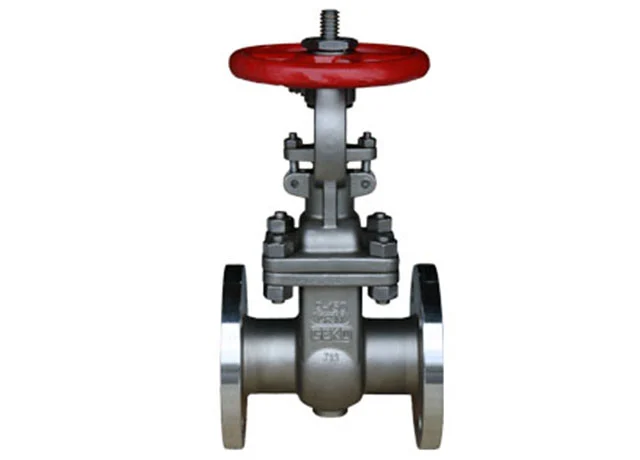
1. Structural and Stem Movement DifferencesThe core characteristic of a rising stem gate valve is that the stem moves up and down in sync with the movement of the gate. The threads on the stem are directly exposed to the outside of the valve body. When the valve opens, the gate rises, and the stem extends out of the top of the valve body. When the valve closes, the gate descends, and the stem retracts into the valve body. By observing the length of the stem extension, one can directly determine the degree of valve opening.
On the other hand, the non-rising stem gate valve has a stem that only rotates and does not move up and down with the gate. The threads on the stem are hidden within the valve body and mesh with the threads on the gate. The stem’s rotation drives the gate up or down to open or close the valve. Externally, the stem maintains a fixed length, and you cannot directly observe the opening and closing process.
2. Performance and Usage Characteristics
Valve Status IndicationRising stem gate valves provide an intuitive visual indication of their opening status. The extent of valve opening can be easily determined by observing the extension or retraction of the stem, making it especially useful in situations requiring clear visibility of the valve's status, such as in firefighting systems, pump stations, and other critical infrastructure. This allows operators to quickly assess the valve's condition.
In contrast, non-rising stem gate valves cannot be directly observed to determine their status, as the stem does not move vertically. The status must be inferred from the valve's indicator or the operator’s feel during operation. If the indicator is missing or unclear, the risk of incorrect operation increases, making the process more prone to errors.
Protection PerformanceThe stem threads of a rising stem gate valve are exposed to the external environment, making them more susceptible to external factors such as dust, moisture, and corrosive gases. Over time, the threads may rust, seize, or be damaged by external forces. Thus, rising stem gate valves offer relatively weaker protection, making them better suited for indoor or clean environments.
In contrast, the threads in a non-rising stem gate valve are completely hidden within the valve body, which protects them from dust and corrosive agents. The protection performance is superior, making it ideal for outdoor, underground, or harsh environments where the medium is corrosive or contains impurities.
Installation Space RequirementsRising stem gate valves require sufficient space above the valve body for the stem to move up and down during operation. If there is insufficient clearance, it can interfere with the proper opening and closing of the valve. Therefore, these valves are unsuitable for installations in confined spaces, such as under ceilings or in narrow equipment gaps.
Non-rising stem gate valves, on the other hand, only require rotational movement of the stem and do not need vertical movement space. This makes them more compact and suitable for installations in tight spaces, such as underground pipelines, ship engine rooms, or densely packed piping systems.
Maintenance Difficulty and CostsThe exposed threads of a rising stem gate valve are easy to maintain. Regular cleaning and lubrication can prevent seizing and rusting, and repairs do not require disassembling the entire valve. Maintenance costs are lower, and maintenance efficiency is higher.
For non-rising stem gate valves, the threads are hidden within the valve body, making routine maintenance difficult without disassembling the valve. If the threads become jammed or rusted, full disassembly is necessary for repair. This increases maintenance difficulty, time, and costs.
Suitable Media and ApplicationsRising stem gate valves are best suited for clean media, such as water, oil, and natural gas, where the exposed threads are not subject to clogging or corrosion. Common applications include water plants, pump stations, firefighting systems, clean pipelines in the petrochemical industry, and water supply and drainage systems in high-rise buildings.
GEKO Control Valves Integration
When considering high-performance valve solutions like GEKO control valves, it is important to note that they offer advanced sealing, control, and maintenance benefits. GEKO control valves can seamlessly integrate with both rising and non-rising stem gate valves, particularly in industrial scenarios where precise flow control is crucial. For example, GEKO valves can enhance the operation of rising stem valves by offering automatic adjustments based on real-time data, ensuring that the valve remains in optimal working conditions despite environmental challenges.
For non-rising stem valves, GEKO control valves further complement their compact design by improving their control capabilities. This makes them ideal for applications where space is limited, but reliable and efficient valve operation is still a critical requirement.
With GEKO’s advanced control systems, both valve types can benefit from predictive maintenance, reducing downtime and improving overall system efficiency. GEKO’s expertise in valve technologies ensures that their control systems can provide superior performance in both clean and harsh operating environments, adding significant value to any pipeline or fluid control system.
Read More






 Email : info@geko-union.com
 Email : info@geko-valves.de
 Email : tw@geko-union.com
 Email : nl@geko-union.com



 IPv6 network supported