How Triple Offset Butterfly Valve Geometry Achieves True Zero Leakage
Jan 19, 2026
Powered by GEKO High-Performance Valve Technology
For a long time, butterfly valves were seen by engineers as a purely “cost-effective” solution—lightweight, compact, simple in structure, and affordable. However, they also carried a long-standing reputation for being unreliable:
- Limited to soft rubber seats
- Poor resistance to high temperature and pressure
- Prone to leakage after long-term operation
In demanding service conditions, the spotlight traditionally belonged to bulky globe valves.
That perception changed with the arrival of a true disruptor:
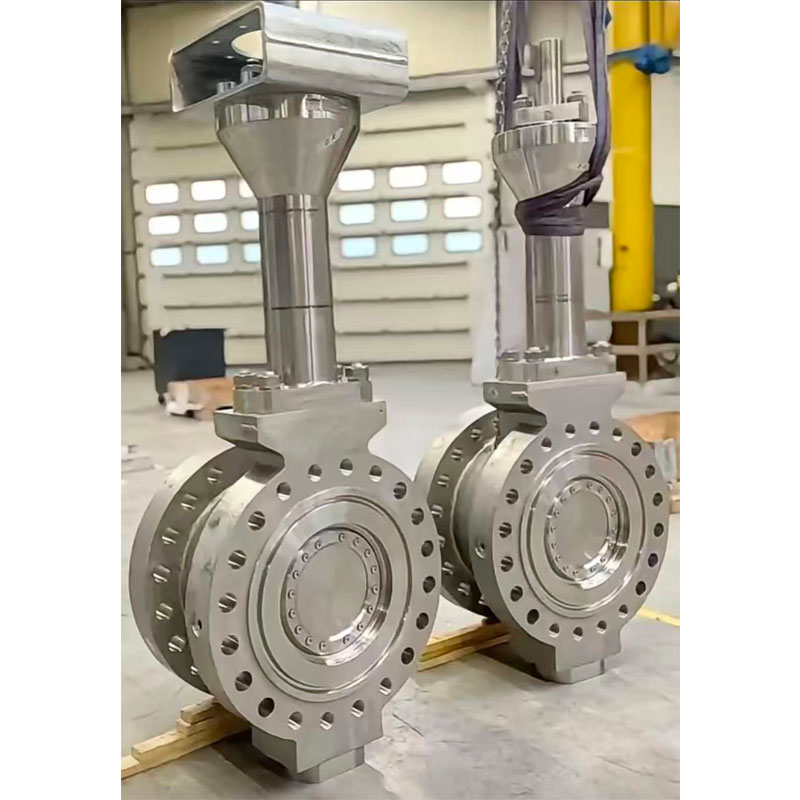
The Triple Offset Butterfly Valve (TOV).
By applying an elegant geometric principle, the triple offset design completely eliminates friction between metal sealing surfaces—making metal-to-metal, zero-leakage sealing a reality. This innovation gave butterfly valves the ability to challenge globe valves in critical applications.
Today, GEKO takes you inside this geometric breakthrough to reveal how three offsets create one engineering miracle.
1. The Achilles’ Heel of Traditional Butterfly Valves: Friction
To understand why triple offset valves are revolutionary, we must first examine why earlier designs fell short.
1.1 Concentric (Zero-Offset) Butterfly Valves
In concentric designs, the shaft centerline, disc center, and sealing center all coincide.
Problem:
Throughout the entire opening and closing cycle, the disc continuously rubs against the seat. To maintain sealing performance, only elastic rubber seats can be used.
Rubber seats: Cannot withstand high temperatures
Age quickly:Are the root cause of leakage and short service life
1.2 Double Offset Butterfly Valves
To reduce friction, engineers introduced two offsets:
Offset 1: Shaft offset from the sealing surface center
Offset 2: Shaft offset from the pipeline centerline
Result:
These offsets create a cam-like action, allowing the disc to quickly disengage from the seat during the initial opening movement. This significantly reduces friction and enables the use of harder PTFE seats with improved pressure and temperature ratings.
But there is still a problem:
At the final closing moment, metal surfaces still slide against each other. If metal-to-metal sealing is attempted, severe galling can occur—leading to jamming or leakage.
2. The Geometry Behind the Breakthrough: Understanding the Triple Offset
To completely eliminate metal friction, engineers introduced the third—and most critical—offset.
Diagram of the Geometric Principle of Triple Offset Butterfly Valve (Core)
Offset 1: Shaft Offset from the Sealing Plane
The shaft does not pass through the center of the sealing surface but is positioned behind it.
Offset 2: Shaft Offset from the Pipeline Centerline
The shaft is also offset vertically from the pipe centerline.
Function of the first two offsets:
They generate the cam effect, allowing rapid separation between disc and seat during opening.
Offset 3: The Cone Angle Offset (The Key Innovation)
This is the most complex—and most powerful—feature.
In a triple offset valve, the sealing surface is not cylindrical. Instead, it forms part of an inclined cone.
The cone’s axis is angled relative to the pipeline centerline. (Cone Angle Offset)
Visual analogy:
Imagine slicing a cone-shaped piece of ham at an angle—the edge of that slice represents the valve’s sealing surface.
This geometry ensures that sealing occurs without sliding, only during the final closing moment.
3. The Moment of Truth: Friction-Free Torque Sealing
When all three offsets work together, the result is extraordinary:
Mechanical friction is completely eliminated during operation.
In a triple offset design, the sealing ring on the disc and the valve seat only make instantaneous line or point contact at full closure.
From 1° to 90°, they remain completely separated—forming a true “No Friction Zone.”
What this means:
No friction → No wear
No wear → Ultra-long service life
Enables true metal-seated sealing
From Position Sealing to Torque Sealing
Traditional valves (Position Sealing):
Sealing relies on compressing soft materials like rubber. Tighter closing leads to higher wear.
Triple Offset Valves (Torque Sealing):
Sealing is achieved by actuator-applied rotational torque, pressing a resilient metal sealing ring firmly against the inclined conical seat.
The higher the torque, the tighter the seal.
This is how GEKO Triple Offset Butterfly Valves achieve:
Metal-to-metal hard sealing
Zero leakage (ANSI/FCI 70-2 Class VI)
Exceptional durability in extreme conditions
4. Where Triple Offset Butterfly Valves Win
Thanks to this advanced geometry, triple offset butterfly valves have rapidly expanded into high-end applications—replacing globe valves and ball valves in many critical services, including:
High-temperature steam
High-pressure oil & gas systems
Offshore and FPSO platforms
LNG and petrochemical facilities
With GEKO’s high-performance butterfly valve solutions, engineers gain compact design, lower torque, longer lifespan, and uncompromising sealing reliability.
5.Recognized Limitations (An Objective Engineering Perspective)
While triple offset butterfly valves are capable of throttling, their limitations must be clearly acknowledged.
Due to their inherently high pressure recovery factor and high gain at low opening positions, triple offset butterfly valves are not ideal for fine control applications under high differential pressure.
In such demanding control scenarios, cage-guided globe valves continue to hold a decisive advantage and remain difficult to replace.
GEKO Valves — Engineering Precision for Zero Leakage Performance.
Read More






 Email : info@geko-union.com
 Email : info@geko-valves.de
 Email : tw@geko-union.com
 Email : nl@geko-union.com



 IPv6 network supported