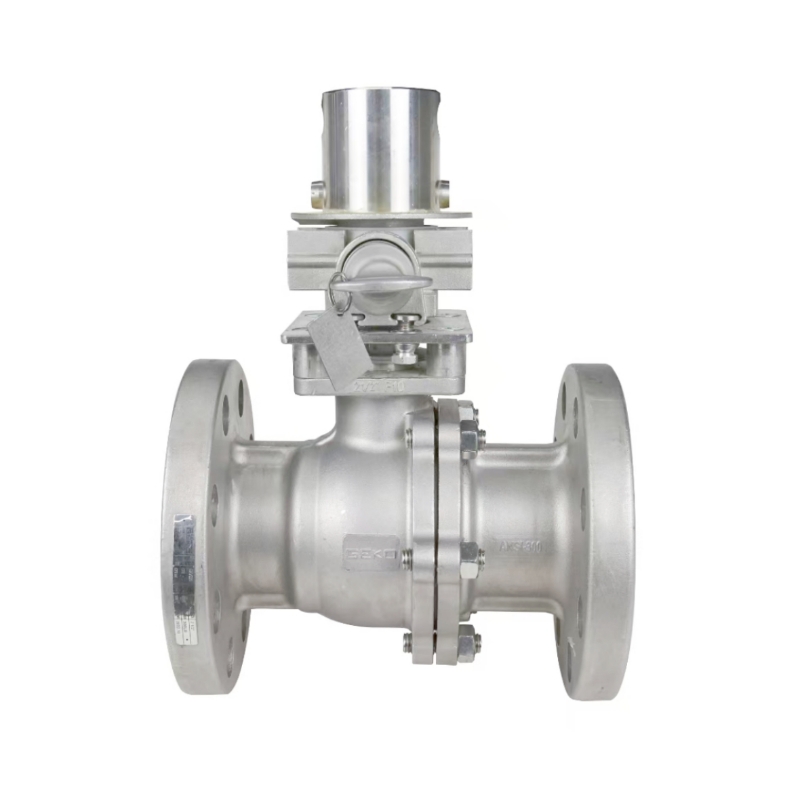
High Temperature Ball Valve

Home

High Temperature Ball Valve

  • The Essential Guide to Ball Valves: Types, Uses, and More | GEKO Valve
    The Essential Guide to Ball Valves: Types, Uses, and More | GEKO Valve
    Sep 14, 2026
      The Essential Guide to Ball Valves: Types, Uses, and More Ball valves are among the most widely adopted quarter-turn fluid control components in modern industrial piping. Favored for quick 90-degree operation, dependable tight shutoff, compact footprint and long service life, ball valves outperform many traditional valve styles for isolation and flow management. This essential guide breaks down ball valve categories, practical industrial uses, key construction features and helpful buying considerations to assist plant engineers, pipeline designers and procurement specialists in understanding industrial ball valves.   1. Main Types of Ball Valves Ball valves are classified based on body design, sealing configuration, bore size, end connection and actuation style. Each variant is engineered for distinct operating environments and fluid services. 1.1 Body Construction Styles One piece ball valve features a single-piece compact body, ideal for small bore, low-pressure general service with lower cost. Two-piece ball valves consist of two assembled body halves, offering convenient disassembly for inspection and maintenance. Three-piece ball valve allows the core trim to be removed without detaching the valve body from the pipeline, greatly simplifying on-site repair and servicing.   1.2 Sealing & Bore Variants Soft-seated ball valves deliver bubble-tight shutoff for clean, moderate-temperature media. Metal-seated ball valves handle high heat, high pressure and abrasive slurries. Full bore ball valves maintain an unobstructed flow path for pigging operations, while reduced bore ball valves provide an economical option for standard isolation duties.   1.3 Manual & Automated Ball Valves Handwheel or lever operated manual ball valves work well for infrequent operation. Automated versions include pneumatic ball valves and electric ball valves for remote control and continuous process automation. 2. Common Industrial Uses for Ball Valves Oil and Gas Industry: Ball valves provide reliable pipeline isolation, handling natural gas, crude oil and refined products across upstream, midstream and downstream processes. Chemical Processing: Corrosion-resistant ball valves manage acids, alkalis and reactive chemicals, protecting piping systems from medium erosion. Water Treatment & HVAC: Stainless steel and carbon steel ball valves regulate water circulation, wastewater and chilled water lines. Power Plants: Heavy-duty ball valves control steam, cooling water and process fluid under high temperature and pressure conditions. Food & Beverage: Sanitary ball valves with polished internal surfaces prevent media contamination and meet hygienic requirements. 3. Key Specifications to Understand When evaluating ball valves, pay attention to pressure class, temperature rating, body material, seat material and end connections. Flanged ball valves simplify installation and removal. Threaded ball valves suit small auxiliary piping, while butt weld ball valves deliver robust permanent connections for high-pressure process lines. Media compatibility is critical. For harsh corrosive media, lined ball valves offer reliable protection. For extreme demanding operating environments, severe service ball valves with hardened sealing surfaces are recommended. If partial flow adjustment is required, a modulating ball valve can provide precise flow regulation instead of simple on/off switching. For ultra-low temperature applications, a cryogenic ball valve is specially engineered to preserve sealing performance under cryogenic conditions. 4. Practical Tips for Ball Valve Maintenance Conduct periodic visual inspection for external leakage at body joints and stem seals. Test valve operation regularly to prevent sticking caused by sediment buildup. Select proper seat materials matching your fluid medium to avoid premature seal degradation. Protect automated actuators from excessive vibration, moisture and extreme ambient temperatures. 5. GEKO Valve Ball Valve Supply GEKO Valve manufactures a complete range of industrial ball valves including one-piece, two-piece and three-piece designs, with stainless steel and carbon steel body options. We supply cryogenic ball valve, lined ball valve, modulating ball valve and severe service ball valve solutions, along with flanged and butt weld end configurations. Every valve is factory tested to meet global industry standards, supporting reliable pipeline isolation for global industrial projects. 9 Core SEO Keywords: Three Piece Ball Valve, One Piece Ball Valve, Two Piece Ball Valve, Sanitary Ball Valve, Threaded Ball Valve, Ball Valve Trim, Ball Valve Body, High Temperature Ball Valve, Process Isolation Valve
    Read More
  • From 550°C to 1100°C: How to Choose High-Temperature Valve Materials? – A Technical Insight from GEKO Valves
    Jun 03, 2026
    In high-temperature service conditions, the maximum allowable operating temperature of valve materials is one of the key parameters determining operational safety, stability, and service life. Due to differences in composition and microstructure, different materials have significantly different temperature limits. As a professional manufacturer of high-temperature valves, GEKO Valves, drawing on years of engineering experience, provides a systematic analysis of the three most widely used high-temperature valve material families – chrome-molybdenum steel, stainless steel, and nickel-based alloys – to help users make scientific selections based on actual operating conditions and avoid safety hazards such as seal failure and structural deformation caused by exceeding temperature limits.     Chrome-Molybdenum Steel – The Mainstream Choice for Medium-to-High Temperatures   By adding chromium and molybdenum to carbon steel, chrome-molybdenum steel significantly improves creep resistance and oxidation resistance, solving the problems of graphitization and strength degradation commonly seen in ordinary carbon steel at high temperatures. The GEKO chrome-molybdenum steel valve series covers the following common grades:   15CrMoG (equivalent to ASTM A217 WC5): Long-term temperature limit of approximately 540–550°C, suitable for auxiliary steam lines in power plants. WC9: Temperature resistance up to 593°C, widely used in main steam lines of subcritical units in thermal power plants. 2.25Cr-1Mo: Conventional design temperature rating of approximately 565–590°C, and up to 650°C with special stress-relieved treatment. It can reliably serve in medium-to-high temperature environments such as hydrogenation units. GEKO Valves applies optimized heat treatment processes to this material to further enhance high-temperature stability.     Stainless Steel – Combining Corrosion Resistance and High-Temperature Performance   Austenitic stainless steels are widely used due to their good corrosion resistance and high-temperature stability. The GEKO stainless steel high-temperature valve series offers multiple grade options:   304 / 304H: Type 304 is generally recommended for long-term use not exceeding 550°C; for higher temperatures, 304H can be selected. Suitable for high-temperature fluid control without strong corrosion. 316L: Long-term temperature resistance of approximately 550–560°C, suitable for high-temperature corrosive media containing sulfur. 321: Contains titanium, offering excellent resistance to intergranular corrosion, with a long-term temperature resistance of up to 650°C, ideal for high-temperature wet steam systems. GEKO 321 series valves have been successfully applied in multiple steam pipeline projects. 310S: Due to its high chromium and nickel content, it exhibits excellent oxidation and creep resistance, with a long-term temperature resistance of up to 700°C (in oxidizing atmospheres). Commonly used in heat treatment furnaces, incinerator exhaust systems, and other high-temperature applications. GEKO 310S valves provide reliable performance in high-temperature oxidizing environments.   Nickel-Based Alloys – The Core Material for Ultra-High Temperatures   Nickel-based alloys, relying on the excellent high-temperature stability of nickel combined with strengthening effects of chromium, molybdenum, niobium, and other elements, offer significantly higher temperature limits than chrome-molybdenum steels and stainless steels. The GEKO nickel-based alloy valve series covers the following high-end grades:   Inconel 625: Long-term continuous operating temperature of approximately 650–700°C, with short-term peaks up to 815°C. Suitable for petrochemical cracking furnace outlets, high-temperature gas systems, and similar applications. Inconel 718: Long-term temperature resistance of 650–700°C, and up to 980°C for short periods (≤1 hour), combining high-temperature strength and corrosion resistance. Haynes 282 and other high-end grades: Long-term temperature resistance covering 650–950°C. Directional solidification processes further enhance creep strength, making them suitable for extreme high-temperature applications such as nuclear power and concentrated solar power. GEKO Valves can provide customized solutions in these high-end materials. Hastelloy C-276: Long-term temperature resistance recommended within 540–590°C, with strong resistance to highly corrosive acids, suitable for medium-to-high temperature acidic fluid conditions.   Additional Sizing Considerations: Beyond Body Material – GEKO's Complete High-Temperature Sealing Solution   It is important to note that the temperature limit of a high-temperature valve is not the only criterion for selection. The corrosiveness of the medium, operating pressure, and the temperature resistance of sealing materials and seating surfaces must also be considered.   Sealing material: Flexible graphite packing has a recommended long-term temperature limit of 450–500°C in air, and up to 1600°C in inert atmospheres, making it the first choice for high-temperature sealing. GEKO high-temperature valves are standardly equipped with high-quality flexible graphite packing to ensure reliable sealing under high-temperature conditions. Seating surface material: Cobalt-based alloys (such as Stellite 6) welded on sealing surfaces can withstand temperatures above 850°C, improving erosion and wear resistance. GEKO Valves offers Stellite alloy hardfacing options based on specific service requirements. GEKO Valves Recommendation: In practice, the body material, sealing material, and seating surface hardfacing should be matched according to the temperature grade of the operating condition, forming a complete high-temperature resistance system. GEKO Valves provides a complete high-temperature solution, from material selection and sealing pairing to complete valve assembly, ensuring reliable long-term operation of your equipment in the range of 550°C to 1100°C.   Contact the GEKO Valves technical team for high-temperature valve selection advice tailored to your specific operating conditions.  
    Read More

leave a message

leave a message
If you are interested in our products and want to know more details,please leave a message here,we will reply you as soon as we can.
submit

home

products

contact