How to Match Ball Valve Specifications with Flow Requirements
Aug 12, 2026
How to Match Ball Valve Specifications with Flow Requirements
Flow capacity is one of the most fundamental parameters that determine whether a ball valve can operate stably within a piping system. Improper specification matching will result in excessive pressure drop, insufficient fluid throughput, pump overload, energy waste, medium sediment blockage, and even system vibration and safety risks. Many procurement engineers only confirm nominal diameter DN/NPS and pressure class while ignoring internal bore geometry, ball core structure, sealing clearance, flow coefficient Cv and medium viscosity factors, which leads to valve mismatch after installation.
This guide systematically explains how each ball valve technical parameter influences flow performance, clarifies professional terminology aliases, and provides step-by-step rules to select the right valve structure, bore type, body size and internal trim according to actual flow demands for liquid, gas, steam, slurry and cryogenic media.
1. Core Terminology: Key Flow Parameters & Industry Aliases
Before specification matching, it is necessary to unify the professional terms commonly used in global valve and fluid mechanics industries:
Cv Value: Flow coefficient, also called valve flow capacity, the most direct index to measure fluid passing ability
Pressure Drop: Head loss, differential pressure loss across the fully opened valve
Full Port / Full Bore: Equal bore, through bore, full flow passage ball valve
Reduced Port / Reduced Bore: Restricted bore, constricted orifice, partial bore ball valve
Flow Turbulence: Eddy current loss caused by sudden shrinkage of the internal channel
Cavitation: Vaporization and bubble collapse inside the valve under high differential pressure for liquid service
2. How Bore Type Determines Basic Flow Capacity
The internal opening of the ball is the biggest factor affecting Cv value and pressure drop, which we have elaborated in the previous comparison article:
2.1 Full Bore (Full Port) Ball Valve for High-Flow Demands
The inner diameter of the ball passage is completely consistent with the pipeline inner diameter, forming a straight unobstructed flow path.
Highest Cv value among the same nominal size, minimal pressure loss
No dead angle for medium deposition, suitable for high-volume circulation, viscous liquid, slurry, crude oil and LNG cryogenic fluid
Supplies pipeline pigging operation, mandatory for long-distance main transmission pipelines
Applicable structure: Full bore trunnion mounted ball valve for large size high-pressure process lines
2.2 Reduced Bore (Reduced Port) Ball Valve for Low-Flow Branch Lines
The ball orifice is 1–2 sizes smaller than nominal pipe size, creating a contracted flow channel.
Lower Cv value, obvious turbulence and pressure drop during fluid transportation
Smaller ball core reduces operating torque, matches smaller pneumatic or electric actuators
Economical for instrument air, sampling loops, HVAC water, and auxiliary low-flow isolation points
Not allowed for media prone to crystallization, scaling and solid particle clogging
3. Valve Body Structure Impacts Flow Resistance
3.1 Floating Ball Valve vs Trunnion Mounted Ball Valve
Under the same bore size, trunnion mounted ball valves adopt upper and lower shaft positioning structure with smaller sealing friction, smoother internal flow streamline and slightly higher effective Cv value. They are the preferred type for large diameter, high flow rate and high pressure working conditions. Floating ball valves are mostly used in small-bore DN15-DN100 general service, with acceptable flow performance for low and medium flow requirements.
3.2 One Piece / Two Piece / Three Piece Body Structure
Two-piece ball valve: Smooth internal casting transition, standard flow resistance for most industrial flow scenarios
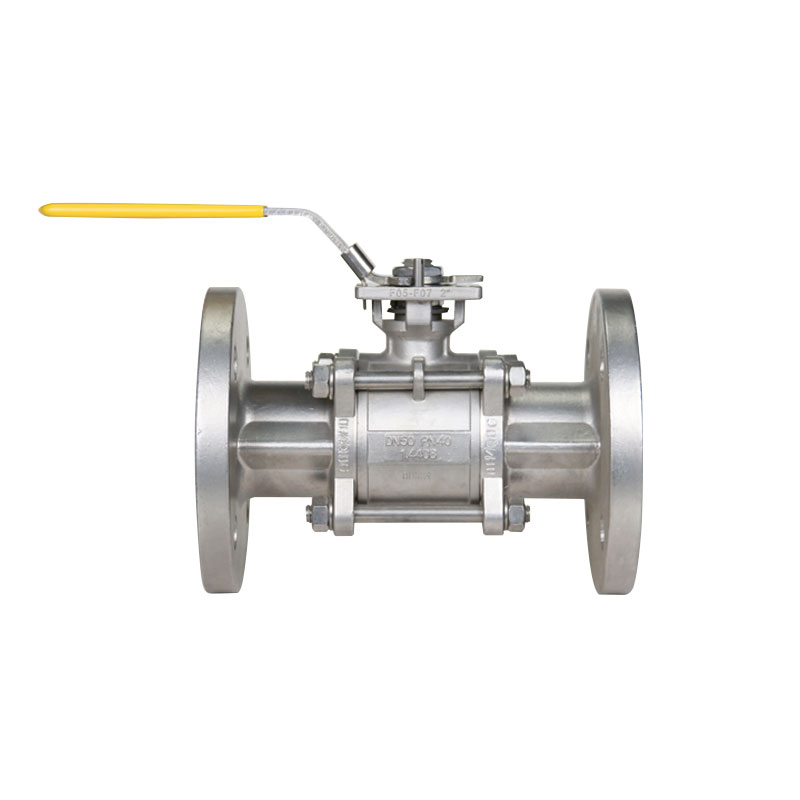
Three-piece ball valve: Split body with more internal assembly gaps, slightly higher minor flow loss, mainly selected for easy maintenance rather than flow optimization
One-piece forged ball valve: Compact inner cavity, used for tiny flow instrument tubing only
4. Sealing Material & Trim Design Affect Effective Flow Area
Different seat thickness and sealing protruding amount will occupy part of the flow channel and change actual flow capacity:
PTFE/RPTFE soft seat ball valve: Thin ring-shaped seat occupies little inner space, maximum effective flow area and high Cv value, ideal for clean liquid and gas large-flow systems
PEEK reinforced seat ball valve: Thicker wear-resistant seat reduces partial passage size, slightly decreases flow coefficient, suitable for abrasive corrosive media with moderate flow demand
STL hardfacing metal seated ball valve: The overlay welding layer increases ball surface thickness, small flow attenuation, adopted for high-temperature steam and high-pressure abrasive fluid where flow rate is secondary to durability
5. Medium Characteristics Require Targeted Specification Matching
5.1 Liquid Media (Water, Chemical Solvents, Oil)
- High flow water circulation, cooling system: Full bore flanged ball valve to cut pump energy consumption - High-viscosity crude oil, syrup, slurry: Full bore trunnion ball valve to avoid flow blockage - Low-flow chemical dosing: Reduced bore small-size threaded ball valve
5.2 Gas & Compressed Air
- Main compressed air header: Full bore design to lower pressure drop in long-distance gas transmission - Branch instrument gas points: Reduced bore compact ball valve for cost control
5.3 Steam & High-Temperature Fluid
Saturated and superheated steam produces large volume expansion, must calculate flow Cv under high temperature; prefer full bore metal seated ball valve to prevent seal deformation and flow narrowing caused by thermal expansion.
5.4 Cryogenic Media (LNG, Liquid Nitrogen)
Low-temperature liquefied gas has strict flow stability requirements, only full bore fixed trunnion ball valve is permitted to eliminate two-phase flow impact and cavitation damage.
6. Step-by-Step Standard Matching Workflow
Calculate required maximum flow rate and allowable maximum pressure drop of the loop
Determine minimum Cv value the valve needs to reach, select full bore or reduced bore accordingly
Confirm medium type, viscosity, temperature and particle content to lock body material and sealing configuration
Choose floating or trunnion structure based on nominal size and pressure class
Match end connections (flanged, BW, SW, threaded) and actuator type according to on-site layout
Verify cavitation risk for high differential pressure liquid service and add anti-cavitation trim if necessary
7. Common Specification Mismatch Pitfalls
Using reduced bore ball valves on main high-flow process pipelines, leading to excessive head loss and increased operating electricity cost
Selecting thick PEEK hard seats for large-flow clean water systems, unnecessarily reducing effective Cv value
Specifying floating ball valves for DN200 and above large-diameter high-flow lines, resulting in excessive operating torque and actuator overload
Ignoring cavitation in high-pressure liquid pipelines, causing internal trim erosion and continuous flow fluctuation
Conclusion
Matching ball valve specifications with flow requirements is centered on quantifiable indicators such as Cv flow coefficient and pressure drop. The core selection logic is: adopt full bore full flow trunnion mounted ball valves for large-flow, low pressure loss, pigging-required and particle-containing media; deploy economical reduced bore ball valves for small-flow auxiliary branches and instrument pipelines. Meanwhile, coordinate body structure, seat material, trim design and medium properties together to guarantee stable, efficient and energy-saving fluid transportation for the whole piping system.
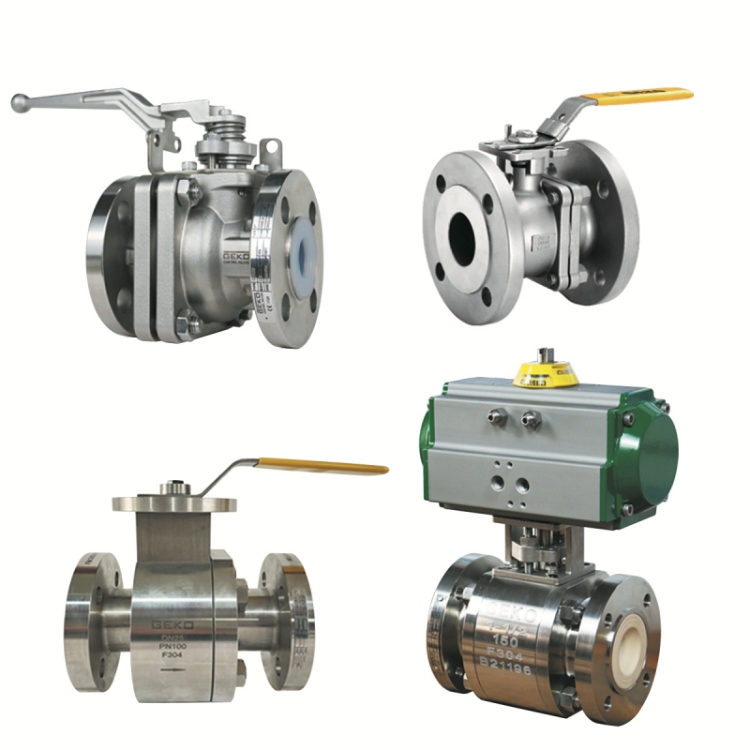
GEKO Valve provides full bore and reduced bore ball valves in floating & trunnion designs, with complete Cv flow parameter test data, multiple sealing options and material grades, to support precise flow specification matching for power, petrochemical, cryogenic, chemical and water treatment projects.
Read More






 Email : info@geko-union.com
 Email : info@geko-valves.de
 Email : tw@geko-union.com
 Email : nl@geko-union.com



 IPv6 network supported