Valve Surface Treatment

Home

Valve Surface Treatment

  • Metal Surface Treatment for Control Valves: Chrome Plating, Nitriding, and HVOF Explained
    Metal Surface Treatment for Control Valves: Chrome Plating, Nitriding, and HVOF Explained
    Apr 09, 2026
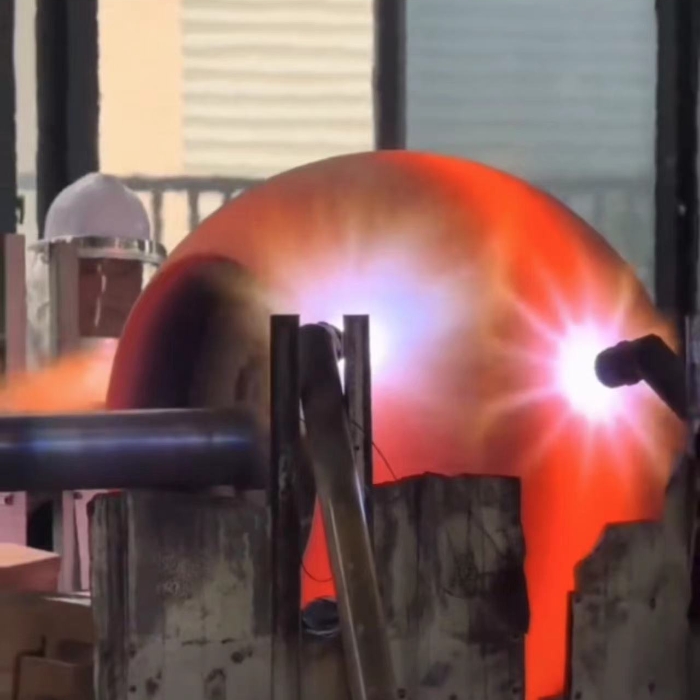
    The reliability of control valves in severe service depends heavily on material selection and surface treatment technology.     If you have visited a turbine bypass system in a power plant or a black-water letdown valve in a coal chemical plant, you have probably seen how badly valve trim can be damaged by the process media.   Under conditions involving high pressure drop, flashing, and particle erosion, a standard 316 stainless steel trim can wear out very quickly.   Many people ask: if 316 stainless steel is not wear-resistant enough, why not machine the whole trim from a solid hard alloy? In theory it is possible, but in practice the cost is extremely high, and the material is too brittle to withstand thermal shock or water hammer.   That is why industry usually adopts the concept of “a tough core with a hard surface,” using a strong base metal to absorb impact and a hardened surface to resist wear. For GEKO control valves, this combination of material strength and surface engineering is a key solution for severe service applications.   Today, let us look at the three most commonly used surface treatment technologies for control valves: chrome plating, nitriding, and HVOF.   The Classic Solution: Hard Chrome Plating     Hard chrome plating is one of the most common surface treatment methods in the control valve industry.   It works by placing the stem or plug into an electroplating bath, where a hard chromium layer is deposited through an electrochemical process. A hard chrome layer offers a low friction coefficient and high surface hardness, typically around 65–70 HRC.For this reason, chrome plating is especially suitable for valve stems and other components that move repeatedly.The smooth chrome-plated surface can reduce packing friction and help extend packing life.   For valve stems in standard GEKO control valve applications, chrome plating is often an economical and practical solution.   However, chrome plating also has clear limitations.On a microscopic level, hard chrome usually contains a network of micro-cracks.   If the medium is highly corrosive, corrosive liquid may penetrate through these cracks and reach the base metal. Once the substrate is attacked, the chrome layer may begin to peel off.   Therefore, chrome plating is better for friction reduction than for severe corrosion or heavy particle erosion.   Deep Surface Strengthening: Nitriding To avoid the peeling issue associated with coatings, engineers often use diffusion-based surface hardening processes, among which nitriding is one of the most representative.   Nitriding does not apply an external layer on the surface; instead, nitrogen atoms diffuse into the metal surface.   These nitrogen atoms react with elements such as iron and chromium in the metal, forming a high-hardness nitride layer. The surface hardness after nitriding can often exceed 1000 HV.   The biggest advantage of nitriding is that the hardened layer is integrated with the substrate, with no obvious physical interface.   Because of this, a nitrided layer is far less likely to peel off like a conventional coating. In addition, nitriding is carried out at relatively low temperatures, so part distortion is minimal after treatment.   In high-temperature steam service, nitriding can effectively reduce the risk of galling between the plug and seat. Therefore, in steam applications for GEKO control valves, nitriding is often an important upgrade option for plugs and guiding parts.   However, nitriding is not a universal solution.Its hardened layer is usually only about 0.1 to 0.2 mm thick.If the medium contains a large amount of high-velocity hard particles, this thin hardened layer can still be worn through quickly.     Therefore, nitriding is more suitable for high-temperature anti-galling and moderate wear conditions.   Heavy-Duty Armor: HVOF (High Velocity Oxygen Fuel)     When a control valve is exposed to extremely severe conditions such as coal slurry, mineral slurry, severe flashing, or intense particle erosion, chrome plating and nitriding are often no longer sufficient.(HVOF)   Its principle and violent aesthetics: The gun tip of HVOF is like a miniature rocket engine. It mixes oxygen with fuel (such as kerosene) and ignites it to generate a supersonic high-temperature jet. Then, extremely hard Tungsten Carbide (WC) or chromium carbide powder is fed into this jet.   The powder is semi-melted and travels at an astonishing speed (more than twice the speed of sound!) Strike hard on the surface of the valve core. We can use the kinetic energy formula to sense this violent energy     The extremely high speed makes the coating extremely dense (porosity < 1%), and the bonding strength with the substrate is ridiculously high.   Its strength: The king of anti-wear without any blind spots. The thickness of tungsten carbide coating is usually between 0.2 and 0.4 mm, and its hardness can soar above 70 HRC. It can not only withstand extremely violent particle erosion, but also its dense structure blocks the penetration of corrosive media.   For GEKO control valves operating under high pressure drop, severe flashing, and heavy wear conditions, HVOF is often one of the most reliable surface enhancement solutions.   Of course, HVOF also has its disadvantages.First, it is expensive and requires very strict process control.If substrate preparation is poor or spray parameters are not properly controlled, coating failure may still occur.Second, HVOF is a line-of-sight process, so it is difficult for the spray gun to reach complex internal geometries such as deep cage holes.Even so, under severe wear conditions, HVOF remains one of the most important high-end industrial solutions available.     Valve Surface Treatment Selection Guide for GEKO Control Valves   Selecting a surface treatment for a control valve is not simply about choosing the hardest option, but about matching the treatment to the service condition.: If the main purpose is to reduce friction, such as between the valve stem and packing, hard chrome plating is usually a cost-effective choice.   If the service mainly involves high-temperature steam, anti-galling requirements, and light to moderate wear, nitriding is a better choice. If the service involves severe flashing, high-pressure-drop slurry, or heavy particle erosion, HVOF tungsten carbide coating should be considered first.   For GEKO control valves, applying the right surface enhancement solution to different services can significantly improve service life and operating reliability.   Final Thoughts   The performance of modern control valves depends not only on design, but also on the level of surface engineering.   The performance of modern control valves depends not only on design, but also on the level of surface engineering. Choosing the right solution among chrome plating, nitriding, and HVOF can help control valves achieve longer service life and more stable performance in severe service. Only by understanding the principles and application ranges of these processes can the right “metal armor” be selected for GEKO control valves.   Contact us for more: info@geko-union.com              
    Read More
  • Valve Surface Treatment Solutions | Hard Chrome, Nitriding & HVOF | GEKO
    Valve Surface Treatment Solutions | Hard Chrome, Nitriding & HVOF | GEKO
    Mar 31, 2026
    Discover how hard chrome plating, nitriding and HVOF coating improve the wear resistance, corrosion protection and service life of critical valve components from GEKO.   Why Surface Treatment Matters in Industrial Valves In industrial valves, base material selection is only part of the reliability equation. In severe-service applications such as power generation, petrochemical processing, chemical plants, mining slurry lines and other high-pressure systems, critical valve parts are exposed to friction, erosion, corrosion, flashing and particle impact. Without the right surface treatment, even high-quality stainless steel components can suffer rapid wear, leakage, unstable control performance and unplanned shutdowns. At GEKO, surface engineering is considered an important part of valve performance design. By matching the right surface treatment to the right valve component, manufacturers can significantly improve durability, reduce maintenance frequency and extend service life in demanding operating conditions.   Key Valve Components That Commonly Need Surface Treatment Different valve components face different failure modes. The table below shows where surface treatment is commonly applied and what it is intended to solve. Component Common Risk Typical Treatment Main Benefit Valve stem Continuous friction and packing wear Hard chrome plating Lower friction and smoother movement Valve trim / plug Erosion, flashing and throttling damage Nitriding or HVOF Higher wear resistance and longer trim life Valve cage Flow-induced wear in severe control duty Nitriding or HVOF Improved anti-galling and anti-erosion performance Ball / seat contact area Seal surface wear and leakage risk Application-specific treatment More stable sealing and service life   1.Hard Chrome Plating for Valve Stems and Sliding Parts   Hard chrome plating is one of the most widely used surface treatments for valve stems and other components that require smooth sliding contact. A thin, hard chromium layer is electroplated onto the metal surface to improve hardness and reduce friction. For valves, this treatment is especially useful where the stem moves repeatedly through packing. A hard chrome plated stem helps reduce drag, minimize packing wear and maintain smoother actuation over time. However, hard chrome plating is not the best choice for highly corrosive or heavily erosive service. Micro-cracks in the chromium layer can allow aggressive media to penetrate to the substrate, which may eventually lead to peeling or localized failure if the application is not properly matched.   2. Nitriding for Anti-Galling and High-Temperature Wear Resistance Nitriding is a diffusion-based surface hardening process rather than a simple top coating. During treatment, nitrogen atoms diffuse into the surface of the metal and form a hardened layer that is metallurgically bonded to the base material. This makes nitriding highly attractive for valve trim, cages and guiding surfaces where galling resistance and dimensional stability are important. Because the hardened layer is formed within the metal surface, it does not peel in the way a conventional coating can. Nitrided valve parts are often suitable for high-temperature service and for applications where moderate wear resistance is required together with good surface integrity. The main limitation is thickness: the hardened layer is relatively shallow, so it may not be sufficient for extreme particle erosion or very aggressive flashing service.   3. HVOF Coating for Severe-Service Valve Components HVOF, or High Velocity Oxygen Fuel spraying, is one of the most advanced surface treatment methods used for severe-service valves. In this process, powder materials such as tungsten carbide are propelled at extremely high speed onto the prepared component surface, forming a dense and strongly bonded coating. For valve plugs, cages and other trim parts exposed to high-pressure drop, flashing, slurry or abrasive particles, HVOF coating offers outstanding wear resistance. It is often chosen when conventional stainless steel or thinner hardened layers cannot provide adequate service life. A properly applied HVOF coating can significantly improve erosion resistance, reduce maintenance intervals and help valves perform more reliably in the harshest operating conditions. Because the process requires precise preparation and strict quality control, coating quality depends heavily on manufacturing experience and process discipline.   How to Choose the Right Surface Treatment for a Valve Part   There is no single surface treatment that fits every valve application. Selection depends on the valve type, component geometry, operating temperature, pressure drop, media composition and expected failure mode. As a general guideline, hard chrome plating is suitable for valve stems and sliding parts that mainly require low friction. Nitriding is a strong option for trim and guide surfaces where anti-galling, surface hardness and dimensional stability are needed. HVOF coating is typically the preferred solution for severe-service valve trim exposed to heavy erosion, flashing or abrasive media. The most effective engineering approach is to evaluate both the base material and the service environment together. At GEKO, the goal is not only to select a surface treatment, but to match the treatment to the actual working condition of the valve component.   Why GEKO Focuses on Surface Engineering For industrial valve manufacturers and end users, performance is shaped not only by valve design, but also by how each critical surface is protected. Surface treatment directly affects leakage control, torque stability, cycle life and maintenance cost. GEKO integrates component-level surface treatment considerations into valve product development so that critical parts can be optimized for durability, wear resistance and application reliability. This is especially important for valves operating under demanding industrial conditions where premature trim damage can quickly become a costly issue. Whether the requirement is a smoother valve stem, an anti-galling trim surface or an HVOF-coated severe-service component, selecting the correct treatment is a practical step toward longer valve life and more stable performance.     Conclusion Hard chrome plating, nitriding and HVOF are three important surface treatment technologies for industrial valves, but each one serves a different purpose. Understanding where each method performs best helps engineers, buyers and end users choose valve components that are better suited to real operating conditions. For companies looking for more reliable valve performance, the right surface treatment is not just a finishing option. It is part of the engineering solution. GEKO continues to focus on practical valve surface treatment strategies that support longer service life, improved reliability and better overall operating value. For companies looking for more reliable valve performance, the right surface treatment is not just a finishing option. It is part of the engineering solution. GEKO continues to focus on practical valve surface treatment strategies that support longer service life, improved reliability and better overall operating value.    
    Read More

leave a message

leave a message
If you are interested in our products and want to know more details,please leave a message here,we will reply you as soon as we can.
submit

home

products

contact