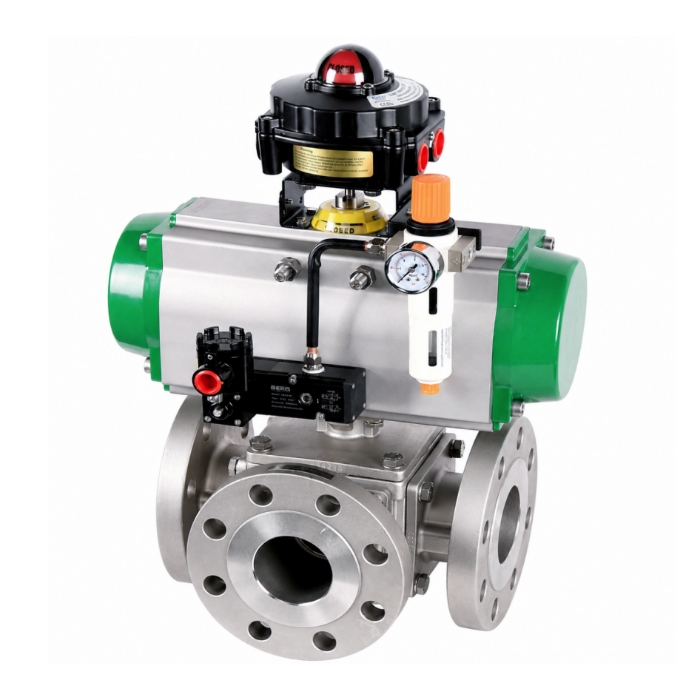
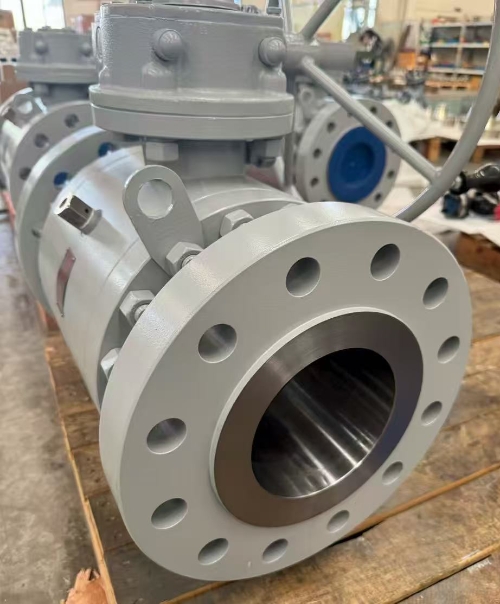
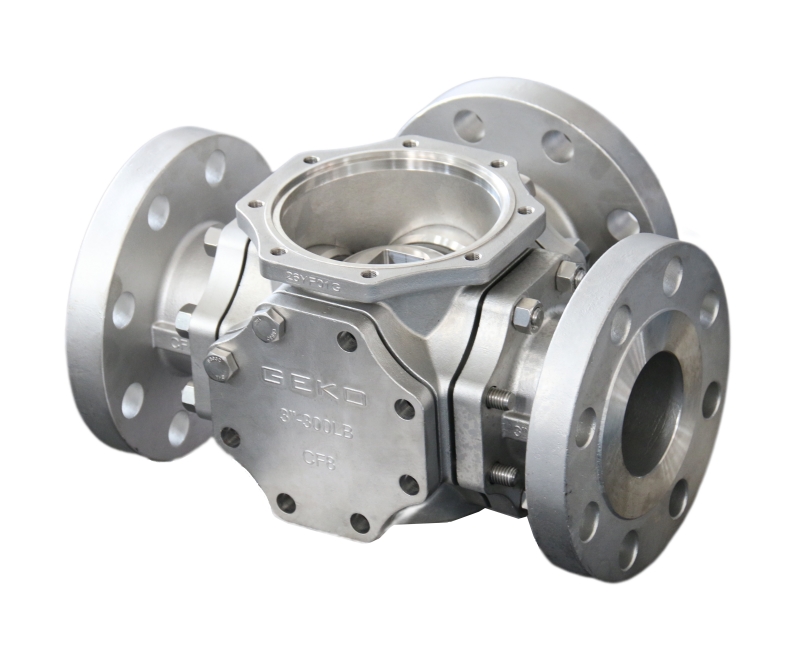
Reduced Port Ball Valve

Home

Reduced Port Ball Valve

  • Ball Valve Selection Made Easy: Types, Applications, and Tips | GEKO Valve
    Ball Valve Selection Made Easy: Types, Applications, and Tips | GEKO Valve
    Sep 13, 2026
      Ball Valve Selection Made Easy: Types, Applications, and Tips Ball valves are the most versatile fluid control devices in modern industrial piping systems. Known for their quarter‑turn fast operation, bubble‑tight shutoff, compact structure, and long service life, ball valves are widely used to isolate or regulate gas, liquid, and slurry media across various industries. However, due to multiple valve structures, sealing types, bore sizes, and actuation options, many engineers and purchasers face confusion during selection. This article simplifies ball valve selection by clarifying common ball valve types, typical industrial applications, and practical selection tips to help you choose the correct industrial ball valve for your working conditions.   1. Common Types of Industrial Ball Valves Understanding ball valve classification is the foundation of correct selection. Industrial ball valves are mainly divided by structure, bore design, sealing method, and operation type. 1.1 Floating Ball Valve vs Trunnion Mounted Ball Valve Floating ball valves feature a free‑floating ball that relies on medium pressure to achieve sealing. With a simple structure and cost‑effective advantages, floating ball valves are ideal for small‑size, low‑pressure and medium‑pressure pipelines. They are widely used for general isolation and flow control in water treatment, HVAC, and light chemical systems.     Trunnion mounted ball valves adopt fixed upper and lower trunnions to lock the ball in place. This structural design greatly reduces operating torque and seat wear, allowing stable operation under large size, high pressure, and frequent cycling conditions. Trunnion ball valves are the preferred solution for heavy‑duty oil & gas pipelines, petrochemical process lines, and long‑distance transmission systems.   1.2 Full Port Ball Valve vs Reduced Port Ball Valve Full port ball valves have a straight bore identical to the pipe inner diameter, providing minimal pressure drop and allowing pipeline pigging. They are suitable for high‑flow pipelines and systems that require low flow resistance and easy pipeline maintenance. Reduced port ball valves have a smaller streamlined bore. They are lighter and more economical while meeting normal isolation requirements. Reduced port ball valves are widely used for general industrial pipelines where ultra‑low pressure drop and pigging are not required.   1.3 Soft Seated vs Metal Seated Ball Valve Soft seated ball valves use PTFE or other polymer materials for sealing, achieving bubble‑tight zero leakage at normal temperatures. They perform well in clean water, gas, and non‑abrasive chemical media and feature low operating torque and reliable sealing. Metal seated ball valves adopt metal‑to‑metal hard sealing with hardened or alloy‑coated seat surfaces. With high temperature resistance, high pressure resistance, and abrasion resistance, metal seated ball valves can handle abrasive slurry, thermal cycling, and corrosive media that soft seals cannot withstand. 1.4 Manual and Actuated Ball Valves Manual ball valves are suitable for low‑frequency operation and simple pipeline control. For automated industrial systems, pneumatic actuated ball valves and electric actuated ball valves are mainstream choices. Pneumatic ball valves offer fast switching and explosion‑proof performance, while electric ball valves support remote control and precise flow regulation for intelligent pipeline systems. 2. Industrial Applications of Ball Valves Different ball valve types correspond to specific industry scenarios. Matching valves based on process media, temperature, pressure, and operation frequency ensures stable long‑term performance. Water Treatment & HVAC: Soft seated floating ball valves and reduced port ball valves are commonly used for water supply, drainage, and air conditioning circulation pipelines. Chemical & Petrochemical Industry: Metal seated ball valves and anti‑corrosion ball valves are applied for corrosive, high‑temperature, and abrasive process media. Oil & Gas Transmission: Trunnion mounted ball valves and full port ball valves ensure safe isolation, low pressure loss, and convenient pipeline pigging. Power & Thermal Energy: High‑temperature resistant metal seated ball valves adapt to steam, thermal cycling, and high‑pressure working conditions. Automated Process Industry: Pneumatic and electric actuated ball valves realize automatic switching, remote monitoring, and intelligent flow control. 3. Practical Ball Valve Selection Tips Follow these simple and professional tips to avoid selection errors and improve pipeline system stability: Match structure with pressure and size: Choose floating ball valves for small low‑pressure pipelines and trunnion mounted ball valves for large high‑pressure service. Select sealing type by medium: Use soft seats for clean normal‑temperature media and metal seats for high‑temperature, abrasive, and corrosive media. Choose bore type according to flow demand: Select full port ball valves for low pressure drop and pigging requirements; use reduced port ball valves for cost‑effective general isolation. Select actuation mode reasonably: Use pneumatic actuators for explosion‑proof environments and electric actuators for remote intelligent control. Verify temperature and pressure rating: Always confirm valve class and material adaptability to extreme working conditions to prevent leakage and deformation. 4. Why Choose GEKO Valve Ball Valves GEKO Valve provides a full range of high‑performance industrial ball valves, including floating ball valves, trunnion mounted ball valves, full port and reduced port ball valves, soft seated and metal seated ball valves, as well as customized pneumatic and electric actuated ball valve packages. All valves are manufactured according to international standards, delivering stable sealing performance, low maintenance, and long service life for global industrial piping systems. 9 Core SEO Keywords: Floating Ball Valve, Trunnion Mounted Ball Valve, Full Port Ball Valve, Reduced Port Ball Valve, Metal Seated Ball Valve, Soft Seated Ball Valve, Pneumatic Actuated Ball Valve, Electric Actuated Ball Valve, Industrial Pipeline Ball Valve
    Read More
  • Ball Valve Selection Made Easy: Types, Applications, and Tips | GEKO Valve
    Ball Valve Selection Made Easy: Types, Applications, and Tips | GEKO Valve
    Sep 07, 2026
    Ball Valve Selection Made Easy: Types, Applications, and Tips Ball valves are the most versatile and widely used fluid control components in industrial piping systems. Known for their quarter‑turn fast operation, bubble‑tight shutoff, compact structure, and long service life, they replace traditional gate and globe valves in most process pipelines. However, with dozens of ball valve types and diverse working conditions, many engineers struggle with improper model selection, which leads to leakage, high pressure loss, actuator jamming, or short service life. This guide simplifies industrial ball valve selection by sorting core classifications, matching industry applications, and summarizing practical selection tips for beginners and professional procurement teams. 1. Common Types of Industrial Ball Valves Ball valves can be categorized by structural design, bore size, sealing method, and actuation mode. Each type has fixed applicable scenarios and performance limits: 1.1 Floating Ball Valve & Trunnion Mounted Ball Valve Floating ball valves feature a free movable ball structure with simple construction and cost advantages. The ball floats under medium pressure and presses tightly against the downstream seat to achieve sealing. This type is perfect for small‑size, low‑pressure and medium‑pressure conventional pipelines for general isolation and flow control. Trunnion mounted ball valves adopt upper and lower trunnion fixed support structures. The ball is locked in position, which greatly reduces operating torque and seat friction. It effectively adapts to large‑size, high‑pressure, and high‑frequency cycling working conditions, serving as the mainstream heavy‑duty pipeline ball valve for oil and gas, petrochemical, and long‑distance transmission systems. 1.2 Full Port Ball Valve & Reduced Port Ball Valve Full port ball valves have an inner bore consistent with the pipe diameter, delivering almost zero flow resistance and ultra‑low industrial ball valve pressure drop. They support pipeline pigging cleaning and are widely used in high‑flow transmission pipelines and systems requiring minimal energy loss. Reduced port ball valves adopt a smaller streamlined bore. With lighter weight and lower manufacturing cost, they meet daily isolation requirements for most conventional pipelines and help enterprises save project investment without strict low‑pressure‑drop demands. 1.3 Metal Seated Ball Valve & Soft Seated Ball Valve Soft seated ball valves use PTFE or polymer soft sealing materials to realize bubble‑tight zero leakage at room temperature. They are suitable for clean water, air, gas, and non‑abrasive conventional chemical media, with excellent sealing stability and low operating torque. Metal seated ball valves adopt hard alloy surfacing sealing surfaces, featuring high temperature resistance, high pressure resistance, and abrasion resistance. They can withstand abrasive slurry, thermal cycling, and high‑temperature corrosive media, solving the aging and failure problems of soft seals in harsh industrial environments. 1.4 Manual & Actuated Ball Valves According to operation modes, ball valves are divided into manual and automated types. Manual ball valves are simple and cost‑effective for low‑frequency operation pipelines. For intelligent industrial systems, pneumatic actuated ball valves and electric actuated ball valves are the mainstream choices. Pneumatic ball valves offer fast switching and explosion‑proof performance for dangerous working conditions, while electric ball valves support remote control and precise flow regulation, matching PLC and SCADA system linkage.   2. Typical Industrial Applications for Ball Valves Different ball valve types correspond to exclusive industrial scenarios. Matching valves based on industry characteristics is the core of correct selection: - Water Treatment & HVAC: Soft seated floating ball valves and reduced port ball valves are preferred for water supply, drainage, and central air conditioning circulation pipelines, pursuing cost‑effectiveness and stable sealing. - Chemical & Petrochemical Industry: Corrosive media and high‑temperature processes require metal seated ball valves and anti‑corrosion lined ball valves; high‑pressure transmission pipelines adopt trunnion mounted ball valves. - Oil & Gas Pipeline: Full port ball valves and heavy‑duty trunnion ball valves are widely used to ensure unobstructed medium transmission and support pipeline pigging maintenance. - Power & Metallurgy: High‑temperature steam, slag, and abrasive media require wear‑resistant metal seated ball valves to resist harsh working conditions and extend service life. - Intelligent Automated Factory: Pneumatic and electric actuated ball valves realize automatic switching and remote monitoring, suitable for batch and continuous production pipeline systems. 3. Practical Ball Valve Selection Tips (Beginner‑Friendly) Simplify the selection process with these core rules to avoid most engineering mistakes: - Confirm working conditions first: Clarify medium type, temperature, pressure, and operating frequency. High temperature and abrasion choose metal seats; clean normal temperature media choose soft seats. - Select structure by pressure and size: Small size and low pressure use floating ball structure; large size and high pressure must choose trunnion mounted ball valve. - Match bore type by flow demand: High flow rate, low pressure drop and pigging requirements choose full port ball valve; general isolation chooses reduced port to save cost. - Reasonably configure actuation mode: Explosion‑proof hazardous environments prioritize pneumatic actuation; remote intelligent control scenarios choose electric actuation. - Verify flow capacity and torque: Complete accurate ball valve Cv calculation and ball valve actuator torque matching to prevent jamming, incomplete switching or flow insufficiency. 4. How to Avoid Common Selection Failures Most valve failures are caused by incorrect selection rather than product quality problems. Avoid these typical errors: Do not only select models by pipe nominal size; insufficient Cv value will cause system flow bottlenecks and excessive industrial ball valve pressure drop. Do not use soft seated ball valves for high‑temperature abrasive media, which will lead to rapid seal aging and leakage. Do not equip small‑torque actuators for high‑pressure differential pipelines, resulting in unsmooth valve operation. For long‑distance transmission and frequent maintenance pipelines, avoid reduced port ball valves that cannot support pigging cleaning. 5. GEKO Valve Reliable Ball Valve Solutions GEKO Valve provides a full range of standardized and customized industrial ball valves, covering floating ball valve, trunnion mounted ball valve, full port & reduced port ball valve, metal seated ball valve, and pneumatic/electric actuated ball valve packages. We support professional ball valve Cv calculation and actuator torque matching services, strictly controlling pipeline pressure loss and ensuring stable valve operation for various complex working conditions. Our products serve global water treatment, chemical, oil & gas, power, and automated industrial projects with stable quality and low maintenance costs. Core SEO Keywords: Trunnion Mounted Ball Valve, Floating Ball Valve, Metal Seated Ball Valve, Full Port Ball Valve, Reduced Port Ball Valve, Pneumatic Actuated Ball Valve, Electric Actuated Ball Valve, Industrial Pipeline Ball Valve, High Pressure Ball Valve
    Read More
  • The Ultimate Guide to Ball Valves and How to Choose Them | GEKO Valve
    The Ultimate Guide to Ball Valves and How to Choose Them | GEKO Valve
    Sep 07, 2026
    The Ultimate Guide to Ball Valves and How to Choose Them Ball valves are the most widely used quarter-turn flow control devices in modern industrial piping systems, renowned for their bubble-tight shutoff, fast 90° operation, compact structure, and excellent long-term durability. From general water treatment and HVAC systems to high-pressure oil & gas pipelines, chemical processing, and thermal power plants, ball valves deliver reliable isolation and flow regulation for diverse working conditions. However, many engineers and procurement teams face frequent selection errors due to unclear distinctions between valve structures, sealing types, and actuation modes. This ultimate guide breaks down core ball valve classifications, working principles, key performance parameters, and step-by-step selection rules to help you pick the perfect industrial ball valve for your project. 1. What Is a Ball Valve? Core Working Principle A ball valve controls fluid flow by rotating a hollow, perforated spherical ball inside the valve body. When the ball’s bore aligns with the pipeline, the valve opens for full fluid passage; when rotated 90 degrees, the solid ball surface blocks the flow completely. Compared with gate valves and globe valves, ball valves feature simpler operation, lower industrial ball valve pressure drop, and better adaptability for automated control. With accurate ball valve Cv calculation, engineers can precisely match flow capacity to system requirements, avoiding flow bottlenecks and energy waste.   2. Main Types of Ball Valves (Core Structural Classification) Industrial ball valves are mainly categorized by ball support structure, bore design, sealing mode, and body configuration, covering all mainstream engineering models: 2.1 Floating Ball Valve vs Trunnion Mounted Ball Valve The biggest structural difference in industrial ball valves lies in ball fixation modes. A floating ball valve has an unanchored ball that floats freely under fluid pressure, pressing tightly against the downstream seat to achieve sealing. It features a simple structure, cost-effective price, and is ideal for small-size, low-to-medium pressure conventional pipelines. A trunnion mounted ball valve adopts upper and lower trunnion shafts to fix the ball, transferring fluid pressure load to the trunnion structure instead of the sealing seat. This design greatly reduces ball valve actuator torque, minimizes seat wear, and is the preferred solution for large-size, high-pressure, and high-cycle working conditions, widely applied in heavy-duty pipeline ball valve systems. 2.2 Full Port Ball Valve vs Reduced Port Ball Valve Bore size directly determines flow performance and pipeline applicability. A full port ball valve has an inner bore consistent with the pipe diameter, delivering ultra-low industrial ball valve pressure drop and supporting pipeline pigging cleaning, perfect for high-flow transfer lines and pipeline maintenance scenarios. A reduced port ball valve features a smaller inner bore, with lighter weight and lower manufacturing cost. It suits conventional isolation scenarios with no strict pressure drop requirements and no pigging demand, effectively saving project investment costs. 2.3 Metal Seated Ball Valve vs Soft Seated Ball Valve Sealing material determines the valve’s temperature, pressure, and media adaptability. Soft seated ball valves use PTFE or RTFE materials for bubble-tight zero leakage, suitable for clean, normal-temperature water, gas, and conventional chemical media. A metal seated ball valve adopts hard alloy surfacing sealing surfaces, resisting high temperature, high pressure, abrasive slurry, and frequent thermal cycling. It solves the failure problem of soft seal aging and deformation under harsh working conditions and is widely used in petrochemical, coking, and high-temperature industrial systems. 2.4 Actuated Ball Valve: Pneumatic & Electric Configurations For automated industrial systems, manual ball valves are upgraded to actuated ball valve packages, including two mainstream types: pneumatic ball valve (also named pneumatic actuated ball valve / pneumatic operated ball valve) and electric ball valve (also called electric actuated ball valve / motorized ball valve). Pneumatic models offer fast switching, explosion-proof performance, and high safety for hazardous environments; electric models support precise modulating control and stable remote signal linkage for PLC/SCADA systems. 3. Key Parameters Affecting Ball Valve Selection Blind selection by nominal pipe size is the most common engineering mistake. Standard ball valve selection must verify the following core parameters one by one: - Flow Capacity: Complete professional ball valve Cv calculation according to system flow rate, inlet and outlet pressure, and fluid viscosity to avoid oversizing or undersizing. - Pressure & Temperature Rating: Match the valve pressure class and temperature derating standard to adapt to maximum working pressure and extreme temperature changes. - Actuator Torque Matching: Calculate actual operating differential pressure to confirm ball valve actuator torque, reserve sufficient safety margin to prevent jamming or incomplete switching. - Media Compatibility: Select metal or soft sealing according to corrosive, abrasive, high-temperature characteristics of the fluid to avoid seal damage and leakage. - Pressure Drop Requirement: Choose full port ball valve for low-loss and pigging requirements, and reduced port ball valve for cost-saving conventional scenarios to control industrial ball valve pressure drop. 4. Step-by-Step Ball Valve Selection Process Follow this standardized workflow to select the most cost-effective and reliable ball valve for your system: Step 1: Confirm working conditions – Clarify fluid type, temperature, pressure, flow rate, and system functional requirements (isolation or modulation). Step 2: Determine structural type – Choose floating ball valve for small low-pressure pipelines and trunnion mounted ball valve for large high-pressure pipeline ball valve systems. Step 3: Select bore configuration – Adopt full port ball valve for high-flow low-loss scenarios and reduced port ball valve for general isolation. Step 4: Match sealing mode – Use soft seal for clean conventional media and metal seated ball valve for high-temperature abrasive and corrosive harsh media. Step 5: Confirm actuation mode – Select manual, pneumatic ball valve, or electric ball valve according to on-site power/air source conditions and automation needs. Step 6: Verify core parameters – Complete ball valve Cv calculation and ball valve actuator torque verification to ensure full compliance with system operating conditions. 5. Common Selection Mistakes & Avoidance Tips - Mistake 1: Selecting by pipe size only – Nominal size cannot represent flow capacity. Must rely on ball valve Cv calculation for accurate matching. - Mistake 2: Confusing full port and reduced port – Wrong bore selection leads to excessiveindustrial ball valve pressure drop or failed pipeline pigging. - Mistake 3: Unmatched actuator torque – Ignoring actual differential pressure causes insufficient ball valve actuator torque, resulting in unsmooth switching. - Mistake 4: Misapplied sealing structure – Using soft seals for high-temperature abrasive media leads to rapid aging and failure; harsh working conditions must adopt metal seated ball valve. 6. Industrial Applications of Ball Valves Different ball valve types correspond to exclusive industrial scenarios: floating ball valve and conventional soft-seal valves are widely used in water treatment, HVAC, and general chemical pipelines; heavy-duty trunnion mounted ball valve and metal seated ball valve serve oil & gas, petrochemical, thermal power, and mining industries; automated pneumatic ball valve and electric ball valve are core components of intelligent pipeline control systems, supporting remote monitoring and automatic adjustment. 7. Why Choose GEKO Valve Ball Valves GEKO Valve provides a full range of customized industrial ball valves, including floating ball valve, trunnion mounted ball valve, full port ball valve, reduced port ball valve, metal seated ball valve, and automated actuated ball valve packages (pneumatic and electric). We provide professional ball valve Cv calculation and ball valve actuator torque verification services, effectively controlling industrial ball valve pressure drop for each project. All products comply with international standards, with stable performance, long service life, and low maintenance costs, providing reliable fluid control solutions for global industrial piping systems. Core SEO Keywords: floating ball valve, trunnion mounted ball valve, full port ball valve, reduced port ball valve, metal seated ball valve, pipeline ball valve, ball valve Cv calculation, industrial ball valve pressure drop, ball valve actuator torque, pneumatic ball valve, electric ball valve, actuated ball valve
    Read More
  • Common Ball Valve Sizing Mistakes and How to Avoid Them | GEKO Valve
    Common Ball Valve Sizing Mistakes and How to Avoid Them | GEKO Valve
    Aug 16, 2026
    Common Ball Valve Sizing Mistakes and How to Avoid Them Improper ball valve sizing ranks among the most frequent root causes of poor process performance, premature seat wear, excessive pressure drop, cavitation, noise, and unplanned plant shutdowns. Many engineers and procurement teams rely on nominal pipe size matching alone instead of calculated flow capacity, fluid properties, velocity limits and pressure differential. Whether specifying floating ball valve, trunnion mounted ball valve, full port ball valve or reduced port ball valve variants, correct sizing balances shutoff integrity, flow stability, actuator performance and total cost of ownership. GEKO Valve supports accurate sizing with ball valve Cv calculation, bore selection guidance and application-specific engineering review for industrial, chemical, power and oil & gas piping systems, including heavy-duty pipeline ball valve assemblies. Mistake 1: Sizing Only by Nominal Pipe Size, Ignoring Cv and Pressure Drop The most widespread error is automatically selecting a ball valve with the same nominal size as the adjacent pipe without completing a proper ball valve Cv calculation. Nominal size does not directly define flow capacity; a full port ball valve and reduced port ball valve of the same NPS deliver drastically different Cv values. This oversight leads to two costly outcomes: oversizing or undersizing, and directly impacts industrial ball valve pressure drop across the piping circuit.   How to avoid: Start with process data — flow rate, inlet/outlet pressure, operating temperature, fluid density and viscosity — then compute required Cv. Match the calculated Cv to the valve’s published Cv rating, not merely pipe diameter. Mistake 2: Confusing Full Port and Reduced Port Cv Ratings Buyers often assume a given NPS ball valve will deliver full-bore flow capacity, only to discover the selected reduced-port (standard-port) design has a much smaller internal bore and lower Cv. Reduced bore ball valves are lighter and less expensive, but they create higher industrial ball valve pressure drop and may restrict pigging operations for pipeline ball valve installations. How to avoid: Clearly specify full port ball valve vs reduced port ball valve on your datasheet. Require published Cv for the exact bore configuration. Select full port for pigging, low-loss transfer lines and high-flow isolation; reduced port is acceptable when pressure loss can be tolerated and cost/weight optimisation is needed. Mistake 3: Oversizing Control Ball Valves Oversized ball valves for modulating service operate at very low travel, often 10–20% open. This creates unstable hunting, poor controllability, accelerated seat erosion from high local velocity, and larger, more expensive actuators than necessary. Many specifiers oversize “for safety margin” without flow simulation, a risk that applies equally to floating ball valve and trunnion mounted ball valve designs. How to avoid: Target an operating travel of 40–70% under normal design flow. Reserve safety margin in the engineering calculation rather than arbitrarily upsizing the valve body. Confirm ball valve actuator torque at the actual operating differential pressure, not just maximum system pressure. Mistake 4: Undersizing and Exceeding Safe Fluid Velocity An undersized ball valve becomes a flow bottleneck, raising velocity, turbulence, noise, erosion, cavitation for liquids and choked flow for compressible media. This damages seats, balls and trim while forcing pumps or compressors to consume extra power. The risk of seat degradation is especially pronounced for metal seated ball valve styles used in high-velocity abrasive media. How to avoid: Apply industry velocity limits for liquid, gas and steam. Check for cavitation and choked flow conditions early in the specification phase. If high velocity cannot be eliminated with a larger bore, consider staged pressure reduction or anti-cavitation trim, particularly for metal seated ball valve selections. Mistake 5: Treating Gas / Steam Sizing the Same as Liquid Sizing Liquid sizing formulas do not work for compressible fluids. Gas, vapour and steam change density with pressure, so choked flow and expansion factors must be included. Using liquid Cv methods for gas services produces dangerously wrong sizing results, which will skew your ball valve Cv calculation and inflate industrial ball valve pressure drop. How to avoid: Use compressible-fluid sizing equations for gas and steam. Distinguish between non-choked and choked flow regimes and verify outlet pressure and critical pressure ratio. Mistake 6: Ignoring Face-to-Face Dimensions During Replacement Sizing Even when NPS and pressure class match, inconsistent face-to-face or end-to-end dimensions create fit-up issues during retrofit. This common error delays commissioning and requires rework or spool piece modifications for any floating ball valve, trunnion mounted ball valve or pipeline ball valve replacement. How to avoid: Reference ASME B16.10 and confirm face-to-face length, end connection type — flanged, threaded, butt-weld — and flange standard before ordering replacement ball valves. Mistake 7: Forgetting Pressure Class and Temperature Derating Selecting a valve based only on ambient pressure rating without reviewing pressure-temperature derating is a safety risk. ASME B16.34 ratings fall as temperature rises, and the valve must remain suitable at maximum operating temperature, not just cold conditions — this rule applies to soft-seated and metal seated ball valve models alike. How to avoid: Derate the valve using the applicable pressure-temperature table and confirm the valve’s rating covers the worst-case operating point. Mistake 8: Neglecting Actuator Torque Matching With Actual Differential Pressure Sizing the valve body correctly but under-sizing the actuator is a frequent oversight. Breakaway torque depends on seat friction, media pressure and temperature, not just nominal size. Inadequate ball valve actuator torque leads to slow operation, failure to stroke or incomplete shutoff. How to avoid: Request torque curves at design and maximum differential pressure. Include safety margin for cold start, high viscosity media and cyclic service. Verify ball valve actuator torque output against breakaway and running torque values for your trunnion mounted ball valve or floating ball valve. Proven Ball Valve Sizing Workflow for Engineers & Buyers Collect complete process data: flow, P1, P2, temperature, fluid type, density, viscosity, vapour pressure Define service goal: isolation only or modulating control Calculate required Cv with formal ball valve Cv calculation and check velocity, cavitation or choked flow risk Select full port ball valve or reduced port ball valve and verify published Cv for that exact bore Confirm pressure class, material, pressure-temperature derating and face-to-face dimension; specify metal seated ball valve if high-temperature or erosive service is expected Size actuator using actual differential pressure ball valve actuator torque values Validate with the manufacturer’s application engineering before RFQ release, especially for critical pipeline ball valve projects How GEKO Valve Prevents Sizing Errors GEKO Valve’s engineering team reviews process parameters upfront to avoid the most common ball valve sizing pitfalls. We provide Cv data for full port ball valve and reduced port ball valve, trunnion mounted ball valve and floating ball valve, torque verification, ASME/API dimensional compliance and material selection aligned with fluid chemistry and temperature, including robust metal seated ball valve and pipeline ball valve options. Our pre-order sizing review catches oversize/undersize issues, velocity hazards and ball valve actuator torque mismatches before fabrication begins, reducing site rework and extending valve service life while controlling unwanted industrial ball valve pressure drop through accurate ball valve Cv calculation. Final Sizing Checklist Calculate Cv from process data with proper ball valve Cv calculation, do not default to pipe size Explicitly specify full port ball valve or reduced port ball valve Check liquid cavitation and gas choked flow conditions; select metal seated ball valve where needed Validate safe fluid velocity to reduce erosion, noise and excess industrial ball valve pressure drop Derate pressure class at maximum operating temperature Match ball valve actuator torque to actual operating differential pressure Confirm face-to-face length and end connection standard for retrofit of floating ball valve, trunnion mounted ball valve or pipeline ball valve By moving beyond simple pipe-size matching and adopting data-driven ball valve sizing, project teams deliver stable flow control, minimise wear and noise, and avoid expensive rework after installation. SEO Keywords: floating ball valve, trunnion mounted ball valve, full port ball valve, reduced port ball valve, ball valve Cv calculation, industrial ball valve pressure drop, ball valve actuator torque, metal seated ball valve, pipeline ball valve
    Read More
leave a message

leave a message
If you are interested in our products and want to know more details,please leave a message here,we will reply you as soon as we can.
submit

home

products

contact