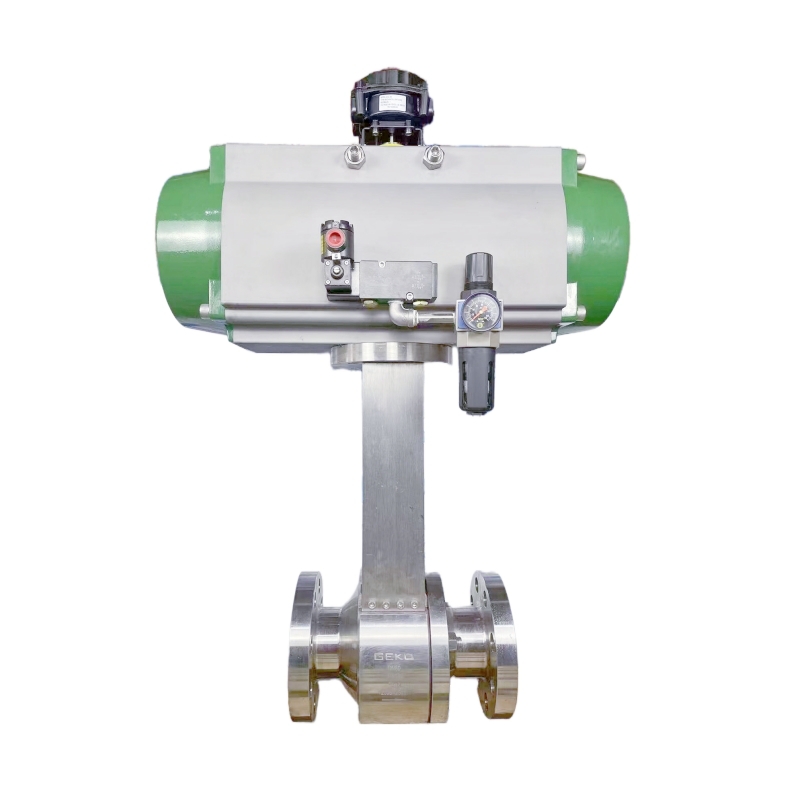
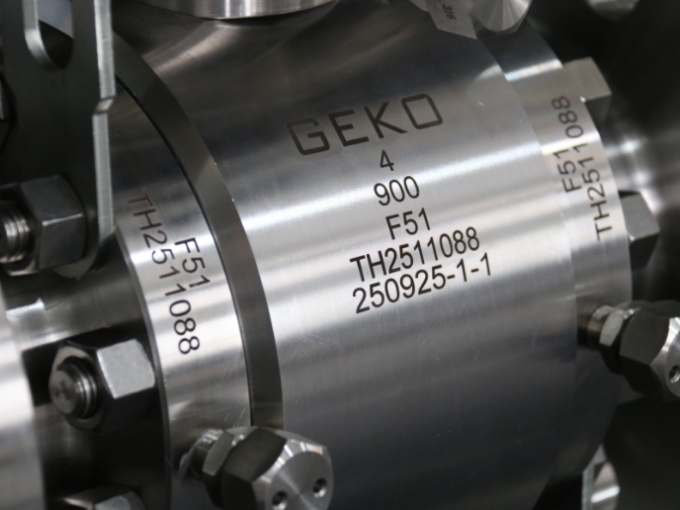
Low Temperature Ball Valve

Home

Low Temperature Ball Valve

  • Types of Specialized Industrial Ball Valves for Unique Piping Applications | GEKO Valve
    Types of Specialized Industrial Ball Valves for Unique Piping Applications | GEKO Valve
    Aug 04, 2026
    Types of Specialized Industrial Ball Valves for Unique Piping Applications Standard industrial ball valves provide reliable on/off shut-off performance for most general piping systems. However, many industrial processes including flow modulation, sanitary production, cryogenic fluid handling, and multi-path fluid switching require specialized ball valve designs to meet unique operating demands. General-purpose floating and trunnion ball valves cannot solve complex process problems such as precise regulation, contamination prevention, ultra-low temperature resistance, and medium diversion. This article introduces four widely used special-type ball valves, covering their structural features, working principles, advantages, and typical industrial applications to help engineers select the correct valve for special piping scenarios.     1. V-Port Ball Valve (Variable Flow Control Ball Valve) A V-port ball valve is a specialized regulating ball valve designed for precise flow modulation. Different from standard round-hole ball valves, its ball core is machined with a V-shaped notch that provides an approximately linear flow characteristic throughout the entire stroke. When the valve opens and closes, the V-shaped cutting edge shears fluid medium smoothly, making it ideal for viscous liquid, fiber-containing medium, and accurate flow adjustment. Key Advantages - Precise 0–100% proportional flow regulation - Excellent linear flow curve for PID automatic control systems - Self-cleaning shear function prevents fiber and particle blockage - Zero leakage shut-off performance Typical Applications: Chemical processing, papermaking industry, wastewater treatment, oil and grease pipelines, and automatic process flow control systems.   2. Multi-Way Ball Valve (3-Way & 4-Way Ball Valve) Multi-way ball valves include 3-way and 4-way structural designs, developed to replace complex pipeline tee joints and multiple valve combinations. They are used to realize fluid diversion, mixing, direction switching, and loop control within a single valve unit, greatly simplifying piping layout and reducing system installation costs. Key Advantages - Integrated fluid switching and mixing function - Simplifies pipeline structure and reduces leakage points - Supports flexible flow direction switching for skid systems - Compact structure, easy for modular equipment integration Typical Applications: Industrial skid-mounted equipment, heating circulation systems, petrochemical fluid switching, HVAC systems, and process medium mixing pipelines.   3. Sanitary Ball Valve (Food Grade Ball Valve) Sanitary ball valves are specially designed for sterile and contamination-free production environments. The entire valve body adopts full mirror polishing treatment with no internal dead corners, no residue accumulation, and smooth fluid passage. Most sanitary ball valves adopt quick clamp connection for fast disassembly and on-site cleaning, fully meeting GMP production standards. Key Advantages - Dead-free internal cavity to avoid bacterial growth - High-precision mirror polishing surface - Food-grade sealing materials available - Easy disassembly, cleaning, and sterilization Typical Applications: Food processing, beverage production, pharmaceutical industry, biological engineering, and cosmetic manufacturing pipelines.     4. Cryogenic Ball Valve (Low-Temperature Ball Valve) Cryogenic ball valves are professional low-temperature resistant valves developed for ultra-low temperature fluid working conditions. Equipped with an extended bonnet structure, the valve isolates low-temperature fluid from packing components, preventing packing failure and frost cracking under extreme low temperature. Special low-temperature resistant materials ensure stable sealing and mechanical performance in cryogenic environments. Key Advantages - Extended stem bonnet protects sealing components from low-temperature frost damage - Professional cryogenic material configuration maintains toughness at ultra-low temperature - Stable sealing performance for long-term low-temperature operation - Anti-static and fire-safe optional design Typical Applications: LNG transmission stations, liquid nitrogen and liquid oxygen pipelines, cryogenic chemical storage systems, and low-temperature energy equipment.   How to Select Specialized Ball Valves for Industrial Systems Standard ball valves can only complete simple on/off cut-off functions. For special industrial processes requiring flow regulation, sterile transportation, low-temperature medium delivery, and multi-path fluid switching, selecting matched specialized ball valves is essential to avoid pipeline blockage, medium contamination, control inaccuracy, and valve failure. Engineers should select valve types according to medium characteristics, operating temperature, control requirements, and industry standards. V-port valves for regulation, multi-way valves for flow switching, sanitary valves for sterile industries, and cryogenic valves for ultra-low temperature systems. Conclusion Specialized ball valves play an irreplaceable role in complex industrial piping systems. Each type of special ball valve is developed for specific process pain points, providing higher precision, stronger environmental adaptability, and safer operation than ordinary ball valves. GEKO Valve provides a full range of customized special ball valves including V-port regulating ball valves, multi-way switching ball valves, sanitary food-grade ball valves, and cryogenic low-temperature ball valves, supporting diversified industrial process system solutions.
    Read More
  • Ball Valve in Liquid Ammonia Service: Reliable GKV225G Series by GEKO Valves
    Ball Valve in Liquid Ammonia Service: Reliable GKV225G Series by GEKO Valves
    Jul 26, 2026
                                                 GKV225G Ball Valve for Liquid Ammonia Service | GEKO Valves   GEKO GKV225G ball valve is specially designed for liquid ammonia service, featuring cryogenic resistance, bubble-tight shut-off and full safety certification. Ideal for refrigeration, chemical and fertilizer ammonia pipeline systems.   Liquid ammonia (NH₃) is a widely used medium in industrial refrigeration, chemical manufacturing, fertilizer production and flue gas denitrification. Characterized by low temperature, corrosiveness, toxicity and flammability, liquid ammonia puts forward extremely strict requirements on pipeline control valves. As a mainstream flow control component, ball valves are the preferred option for liquid ammonia working conditions thanks to fast switching, low flow resistance and excellent sealing performance. Among numerous products, the GEKO GKV225G series ball valve is professionally developed for liquid ammonia service, delivering stable, safe and long-lasting operation for ammonia process systems.   Why Ball Valves Are Preferred for Liquid Ammonia Service Liquid ammonia operates at a typical temperature of -33°C under normal pressure, and it will cause corrosion and embrittlement to unqualified valve materials. Compared with gate valves, globe valves and other types, ball valves show obvious advantages in ammonia pipelines: 1.Bubble-tight shut-off: Effectively prevent leakage of toxic liquid ammonia and meet international fugitive emission standards. 2.Quarter-turn operation: Realize rapid opening and closing, which is critical for emergency cut-off of ammonia systems. 3.Low pressure loss: Straight-through flow structure ensures high conveying efficiency for liquid ammonia. 4.Strong cryogenic adaptability: Professional material and sealing design keep stable performance under sub-zero temperature. For safety-critical liquid ammonia service, standard industrial valves cannot meet long-term operating demands. Customized ball valves such as GEKO GKV225G become the reliable guarantee for production.   Core Technical Requirements for Liquid Ammonia Ball Valves To adapt to liquid ammonia media, valves must comply with IIAR 2, ASME B31.3, API 607 and other industry specifications. Material selection and structural design are the core: - Copper, brass and bronze materials are forbidden to avoid stress corrosion cracking caused by ammonia. - Valve body, ball and stem need low-temperature resistant steel materials to resist cold brittleness. - The sealing assembly must use ammonia-resistant materials to prevent aging and leakage. - Equipped with blow-out proof stem, anti-static device and fire-safe structure for full safety protection. - All products need strict hydrostatic and pneumatic testing before delivery.   Every design detail of the GEKO GKV225G ball valve fully follows the above standards, targeting the harsh working conditions of liquid ammonia. GEKO GKV225G Series Ball Valve: Professional Solution for Liquid Ammonia Service GEKO Valves has rich experience in severe service valve R&D and manufacturing. The GKV225G series ball valve is our flagship model dedicated to liquid ammonia service, optimized in structure, material and performance for ammonia storage, transmission and process control systems.   Main Features of GEKO GKV225G Ball Valve Premium Material Configuration The GKV225G ball valve adopts low-temperature carbon steel and 316L stainless steel as standard materials, which have excellent low-temperature toughness and ammonia corrosion resistance. It can stably work within the temperature range of -46°C to 150°C, perfectly adapting to the conventional operating temperature of liquid ammonia. Copper alloy parts are completely excluded to eliminate hidden dangers of corrosion. Zero-Leakage Sealing System Matched with ammonia-resistant PTFE and PEEK combined seat seals and multi-layer stem sealing structure, GKV225G achieves ISO 15848-1 fugitive emission certification and ISO 5208 Rate A tight shut-off performance. It thoroughly solves the leakage problem of toxic liquid ammonia and protects on-site personnel and the environment. Integrated Safety Design All GKV225G liquid ammonia ball valves are equipped with blow-out proof stem, anti-static device and API 607 fire-safe structure. The vented ball design avoids internal pressure trapping, fully meeting the safety norms of ammonia chemical plants and refrigeration systems. Flexible Installation & Operation The GKV225G series provides full port and reduced bore two structural options, covering DN15 to DN300 sizes and PN16 to PN40 pressure grades. It adopts ISO 5211 standard mounting platform, which is compatible with manual, pneumatic, electric and hydraulic actuators, supporting on-site manual control and remote automatic emergency cut-off. Strict Factory Testing Each GEKO GKV225G ball valve undergoes 100% shell pressure test, seat sealing test and cryogenic performance test before leaving the factory. Strict quality control ensures no failure during long-term field operation and greatly reduces later maintenance costs.   Application Scenarios of GEKO GKV225G Ball Valve Tailored for liquid ammonia service, the GKV225G series is widely used in multiple industries:  - Industrial refrigeration systems for cold storage and food processing  - Fertilizer plants and ammonia synthesis production lines  - Petrochemical and fine chemical ammonia delivery pipelines  - Liquid ammonia storage tanks and terminal loading/unloading systems  - Power plant flue gas denitrification ammonia supply systems   Why Choose GEKO GKV225G Ball Valve for Liquid Ammonia Service Safety is the top priority for liquid ammonia production and transportation. Ordinary valves are prone to leakage, material damage and failure under long-term ammonia medium erosion. As a professional ammonia-specific product, GEKO GKV225G ball valve is designed for working conditions, compliant with global industrial standards, and combines safety, durability and economy.   Choosing GKV225G means: Effectively reducing safety risks caused by ammonia leakage Extending valve service life and cutting downtime and maintenance expenses Supporting manual and automatic control to match different process requirements Enjoying professional technical support and complete after-sales service from GEKO Valves   Conclusion Liquid ammonia service requires high-standard, targeted fluid control equipment. Ball valves are the most suitable valve type for ammonia pipelines, and the GEKO GKV225G series ball valve stands out with professional design, reliable performance and comprehensive safety configuration. Whether you are renovating old pipelines, building new ammonia systems or replacing failed valves, GEKO GKV225G liquid ammonia ball valve can provide you with a cost-effective and safe solution. If you want to know more about parameters, specifications and customized solutions of GKV225G ball valve, please contact GEKO Valves professional team at any time.  
    Read More

leave a message

leave a message
If you are interested in our products and want to know more details,please leave a message here,we will reply you as soon as we can.
submit

home

products

contact