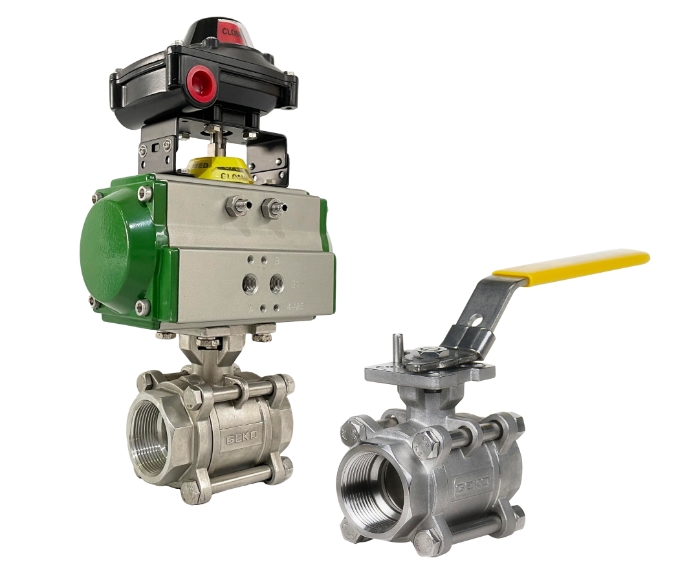
zero leakage ball valve

Home

zero leakage ball valve

  • What's the Difference Between O-Port and V-Port Ball Valves? – Insights from GEKO Valves
    What's the Difference Between O-Port and V-Port Ball Valves? – Insights from GEKO Valves
    Jun 02, 2026
    In industrial fluid control systems, O-port ball valves and V-port ball valves are two common types with different design focuses. Based on years of engineering experience, GEKO Valves provides a detailed comparison in terms of structural design, flow characteristics, regulating performance, shut-off capability, and more, to help you make the right choice.     1. Structural Design   O-port ball valve: The ball has a circular through-hole in the center. When fully open, the hole diameter is basically the same as the pipeline inner diameter, forming a straight flow path. GEKO O-port ball valves are precision-machined for low flow resistance and high sealing performance. V-port ball valve: The ball features a V-shaped notch. GEKO V-port ball valves allow customization of V-notch angle and size according to media characteristics, improving shearing and regulating capabilities.     2. Flow Characteristics   O-port ball valve: Approximate quick-opening characteristic. Flow increases sharply at small openings (e.g., 0°–15°), and reaches 80%–90% of full flow at around 20°–30°. Suitable for fast on/off service, poor throttling capability. V-port ball valve: Approximate equal-percentage characteristic. Flow increases smoothly and linearly with opening, designed for precise throttling. GEKO V-port ball valves maintain excellent controllability even at small openings.     3. Throttling Performance   O-port ball valve: Poor throttling performance. Flow changes drastically at small openings, making precise control difficult; prone to cavitation, vibration, and noise at medium openings. Recommended only for on/off (two-position) control. V-port ball valve: Excellent throttling performance. The V-notch provides stable, predictable flow control, and the V-shaped edge offers shearing action, making it ideal for fibrous, particulate, or slurry media. GEKO V-port ball valves deliver reliable and stable throttling performance.   4. Shut-Off Capability   O-port ball valve: Excellent shut-off capability. With soft or metal seats, it can achieve bubble-tight zero leakage. GEKO O-port ball valves are widely used in applications requiring strict shut-off. V-port ball valve: Relatively weaker shut-off capability. Theoretically, it cannot achieve the same zero-leakage performance as an O-port valve of the same size. Designed primarily for throttling, not absolute shut-off.   5. Flow Resistance   O-port ball valve: Very low flow resistance when fully open, close to a straight pipe, resulting in minimal pressure drop. GEKO O-port ball valves feature optimized flow paths for even lower energy consumption. V-port ball valve: The V-notch creates some flow resistance even when fully open, resulting in a higher pressure drop than an O-port valve.   6. Erosion & Wear Resistance (for media containing solid particles)   O-port ball valve: When switching in particulate-laden media, particles can become trapped between the ball and seat, leading to scoring, wear, or even seizure. V-port ball valve: The sharp edge of the V-notch shears fibers and solid particles, preventing clogging. Better suited for dirty media such as high-viscosity, crystallizing, particulate-laden, or slurry applications. GEKO V-port ball valves excel in wastewater, pulp, slurry, and similar tough services.   7. Typical Applications   O-port ball valve: Suitable for clean liquids and gases (e.g., water, steam, oil, natural gas). The first choice for fast and reliable shut-off. V-port ball valve: Suitable for applications requiring precise flow throttling, especially for challenging media such as pulp, wastewater, slurry, high-viscosity fluids, and crystallizing or scaling liquids. GEKO V-port ball valves are a reliable choice for control valve applications.   8. Cost   Generally, V-port ball valves are more expensive than O-port ball valves of the same size and material due to the more complex machining of the V-notch. GEKO Valves offers various configuration options to balance performance and cost – contact us for sizing recommendations.     9.How to Choose? – GEKO Valve Selection Guide     Requirement Recommended Type Reliable shut-off, zero leakage GEKO O-port ball valve Precise flow throttling GEKO V-port ball valve Clean media Either (depending on functional needs) Media containing particles, fibers, viscous or scaling substances Prioritize GEKO V-port ball valve Budget-limited and on/off only GEKO O-port ball valve   One-sentence summary: O-port ball valves are shut-off experts (tight shut-off), while V-port ball valves are throttling experts (precise control,不怕脏 – not afraid of dirty media). Your choice depends on whether you need shut-off or throttling, and the characteristics of your media.   Why Choose GEKO Valves?   German engineering standards and strict quality control Full range of O-port and V-port ball valves Customizable V-notch design for demanding applications Professional team offering free sizing and selection advice Fast delivery and comprehensive after-sales support 📞 Contact GEKO Valves today for a solution tailored to your operating conditions.  
    Read More
  • GEKO DBB Hard Sealed Ball Valve – Zero Leakage for Natural Gas and Hydrocarbon Gases
    GEKO DBB Hard Sealed Ball Valve – Zero Leakage for Natural Gas and Hydrocarbon Gases
    Jan 27, 2026
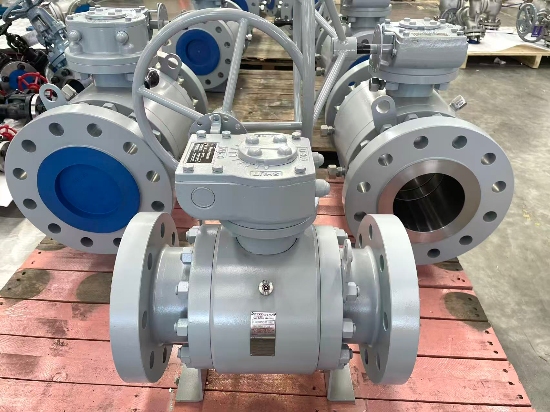
    In the critical stages of natural gas and hydrocarbon gas transportation, valve performance directly affects both safety and efficiency. GEKO’s latest shipment of the DBB (Double Block and Bleed) Hard Sealed Ball Valve has received exceptional feedback from clients, thanks to its ISO 5208 standard gas-tight sealing performance with Rate A zero leakage.     DBB Hard Sealed Ball Valve: The Ideal Choice for Natural Gas and Hydrocarbon Gas Applications   1.1 Core Features: Zero Leakage Sealing and Extreme Condition Adaptability   The GEKO DBB Hard Sealed Ball Valve employs a metal-to-metal sealing design, achieving gas-tight sealing through precision-ground valve seats and ball contact surfaces. It meets the ISO 5208 Rate A leakage standard, fully preventing gas leakage during high-pressure tests. This ensures it meets the stringent zero leakage requirements for natural gas pipelines. The valve body is made from high-strength alloy steel, heat-treated to a hardness of over HRC 60, significantly improving wear resistance and ensuring long-term stable operation in the corrosive environments of hydrocarbon gases like methane and propane.   1.2 Structural Advantages: Dual Isolation and Safety Redundancy   The DBB design includes two independent sealing surfaces with a middle bleed valve, creating a dual isolation barrier. If the primary seal fails, the backup seal immediately activates, while the bleed valve releases residual gas, preventing pressure buildup. This design is crucial in natural gas processing plants, where it effectively prevents leakage-related explosion risks. The valve body is modular, making on-site maintenance easier and reducing downtime.   1.3 Performance Parameters: Covering Full-Spectrum Demands   Pressure Range: Class 150 to Class 1500, suitable for varying pressure levels from low-pressure gathering to high-pressure long-distance pipelines.   Temperature Range: -46°C to 200°C, covering extremely cold areas and high-temperature refining environments.   Nominal Diameter: DN 15 to DN 600, meeting flow control needs from small branch lines to main pipelines.   Actuation Methods: Supports manual, pneumatic, electric, and hydraulic actuators, compatible with automation control systems.     2. In-Depth Analysis of Natural Gas and Hydrocarbon Gas Application Scenarios   2.1 Natural Gas Transport: Core Component for Long-Distance Pipelines   In long-distance natural gas pipelines, the DBB Hard Sealed Ball Valve serves as a critical shut-off device, performing the following functions:   High-Pressure Control: In Class 900 and above pressure pipelines, valves need to endure frequent open/close operations. GEKO valves have passed fatigue tests, maintaining seal integrity after 100,000 cycles.   Emergency Shutdown: When linked to SCADA systems, the valve can open or close fully within 5 seconds, responding to pipeline leak alarms.   Pipeline Cleaning: The quick-opening and closing function of the ball valve, in conjunction with a pigging device, ensures the removal of impurities from the pipeline, maintaining efficient transport.   2.2 Hydrocarbon Gas Processing: Reliable Support for Refining and LNG Facilities   In LNG (Liquefied Natural Gas) receiving stations and refineries, valves face dual challenges of low temperatures and corrosion:   Low-Temperature Sealing: Special low-temperature sealing materials maintain elasticity at -196°C, preventing leaks caused by cold shrinkage.   Corrosion Protection: The valve body is coated with a nickel-based alloy coating, resisting corrosion from acidic gases such as H₂S and CO₂, prolonging service life.   Process Isolation: In distillation towers, compressors, and other equipment, the valve enables precise flow control of hydrocarbon gases, supporting process optimization.   2.3 Typical Application Cases   Case 1: In a multinational natural gas pipeline project, after adopting GEKO DBB Ball Valves, the leakage rate dropped from the industry average of 0.5% to 0%, saving over $2 million in annual maintenance costs.   Case 2: In a Middle Eastern refinery’s high-temperature cracking unit, GEKO valves have been in continuous operation for 3 years without seal failure, replacing the original imported product.   3. How to Match Requirements with Product Features 3.1 Key Parameter Selection   Pressure Rating: Choose valves with Class 300 to Class 1500 ratings based on pipeline design pressure to avoid overpressure risks.   Temperature Range: Opt for low-temperature valves in cold regions, while high-temperature environments require consideration of heat dissipation designs.   Actuation Method: For remote control scenarios, electric actuators are recommended, while pneumatic drives are ideal for emergency shutdown systems.   3.2 Installation and Maintenance Tips   Pre-Installation Check: Confirm the valve’s flow direction marking matches the pipeline and that the flange connection surfaces are clean and undamaged.   Seal Grease Injection: Use specialized seal grease to enhance low-pressure sealing, ensuring the injected amount complies with manufacturer specifications.   Regular Maintenance: Check seat wear every 6 months and perform gas-tightness tests annually. Replace aging components promptly.   3.3 Industry Standards and Certifications   ISO 5208 Certification: Ensures the valve passes stringent gas-tight tests, with a leakage rate lower than 0.01%.   API 6D Compliance: Meets petroleum and natural gas industry standards, ensuring reliability in design, manufacture, and inspection.   CE Certification: Complies with EU pressure equipment directives, supporting global procurement.   Choose GEKO Valves Today: Visit the GEKO website or contact authorized distributors. info@geko-union.com
    Read More

leave a message

leave a message
If you are interested in our products and want to know more details,please leave a message here,we will reply you as soon as we can.
submit

home

products

contact